
Interview with SEA OF SIN (1/2)
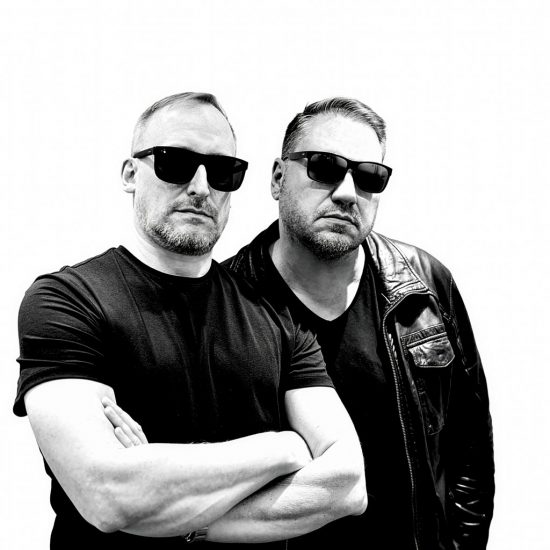
Sea of Sin ‘s new album is entitled “The Shape of a Lonely Soul”. We talk to Frank Zwicker and Klaus Schill in two parts.
Orkus: You once said that you’ve known each other since you were kids. Did you meet at school? Do you remember when that was?
Frank Zwicker: Yes, Klaus and I have known each other since we were at grammar school together. Our first contact was a very long time ago, it must have been in the early/mid-eighties. It’s hard to imagine a time without cell phones, the Internet and social media today. I think we formed our first band at the age of 18, when we were still at grammar school, together with our school friend Dirk. The band Sea of Sin later emerged from this, after we unfortunately had to change our name in 1993 when we had finished pressing CDs and had a record deal. Before that we were called Covent Garden, but unfortunately there had been another band with the same name for a long time – a disadvantage of the time before the internet, when you couldn’t just google something like that.
O: Which albums or songs made you realize that you had a similar taste in music?
Klaus Schill: We both actually always had a very wide range of musical tastes, but back then we were united by our love of new wave, synthpop and dark wave. As I said, we are also children of the eighties. Our hearts beat especially for bands like Camouflage, Depeche Mode, OMD, The Cure or New Order and Ultravox – to name just a few. Individual songs didn’t really stand out, as these bands already had a large musical pool of great songs and albums with recognition value back then. Ultimately, I think it was the music and aesthetics of these bands that inspired us to make our own music, to try our hand at being creative and to write our own songs. Right from the start, we had also integrated guitars from time to time; even back then we found rigid genre boundaries boring.
O: What were the thoughts behind calling the new album “The Shape of a Lonely Soul”?
KS: The idea for the album title came about during the production process and when selecting the final album tracks. All songs and lyrics thematically unite a certain forlornness and excessive demands in these turbulent times in which we live, characterized by the currently prevailing political and social upheavals. The lyrics focus on the topics of hopelessness, inner emptiness, accumulating anger in an increasingly polarized world. In this respect, the album title is a somewhat abstract description of the mental state of society.
O: The first four tracks, which describe the descent of the soul, were the prelude. So would you (also) describe “The Shape of a Lonely Soul” as a concept album?
FZ: I wouldn’t necessarily classify “The Shape of a Lonely Soul” as a classic concept album; it’s more the case that all the songs are linked by a certain melancholy mood, which forms the musical arc of the album. The feeling of being overwhelmed and lost can then express itself emotionally in different phases, from slowly dwindling faith (“Faith!”) to rising anger (“No Excuse”) to violent fantasies (“Bang Bang Bang”) and the search for redemption (“Save Me”). This was the basic conceptual idea behind the first four single releases, all of which were released last year. The other album songs are deliberately more abstract, leaving a little more room for the listener’s own interpretations.
O: How can we imagine working on the album?
KS: Our production and composition process has been going on for many years in such a way that Frank practically continuously records new song ideas and demos, from which we jointly select the best tracks when new releases are being planned. After focusing on live concerts in 2024 (as part of the band’s 30th anniversary), we started to sift through the demos at the beginning of 2025 and select our first favorites, which we then want to work on and produce. I pre-produce these in my home studio in Hamburg and we iteratively work on the songs until we are happy with the rough version. Frank continues to work on his vocal lines during this production phase and deals with the lyrics of the songs. In the next step, we go to a professional recording studio and record the vocals and any additional guitar lines – since 2019 at Studio B in Stuttgart with Thomas Banse, who supports us as a sound engineer. Once everything is recorded, I go back to my home studio and fully produce and mix the tracks.
FZ: Then we go to Calyx Mastering in Berlin for mastering, where we also had the previous album “Tired of Chasing Ghosts” from 2023 mastered. Our production process has worked well over many years and also works across the long distance between Hamburg (Klaus) and Stuttgart (Frank). Fortunately, nowadays you can share ideas and production statuses at short notice via file sharing and give feedback, allowing you to continue working on the tracks iteratively.
Claudia Zinn-Zinnenburg
Line-up:
Frank Zwicker – vocals, lyrics
Klaus Schill – synths, guitars, production
Take a look at the visualizer for “Dark Revelations”:
Already subscribed to our newsletter?
You can subscribe to the print edition of Orkus! magazine here:


