
BEAT NOIR DELUXE Interview (Part 1 of 2)
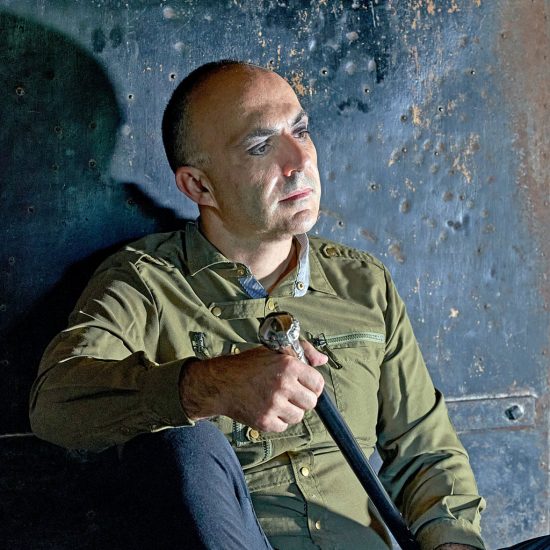
With “Tempus Fugit,” Beat Noir Deluxe is releasing their third album. In our two-part interview, we talk with Sascha Giacomuzzi about playing with contrasts, a demon named loneliness, and castles in the air.
Orkus: How did you come up with the album title “Tempus Fugit”?
Sascha Giacomuzzi: The title came to me very naturally. As you get older, you get the growing impression that time is passing more quickly. I have three children who are now 12, 15, and 17 years old—and when you watch them grow up, you become very aware of that. There are even scientific explanations for this: the more we’ve experienced, the faster time seems to pass. “Tempus Fugit” perfectly captures that feeling.
O: You experienced firsthand in 2017 just how quickly life can be over, and that ultimately led to the founding of Beat Noir Deluxe two years later. First of all: How are you doing today? Have you been able to put the car accident and everything that came with it behind you? Or does it still “haunt” you in some way?
SG: My wife and my three children were in the car with me during the head-on collision. Each of us dealt with the experience in our own way, and it was a very difficult turning point for all of us. Physical injuries heal—bones heal, scars fade. But coming to terms with it mentally is a much longer process. Issues like post-traumatic stress disorder stay with you for a long time. It’s a journey you have to take one step at a time.
O: There’s a story behind the album cover for “Tempus Fugit,” isn’t there?
SG: The photo shows a stalactite that I photographed myself a few years ago in the Neptune Grotto in Sardinia. The idea behind it is closely linked to the album title: For us humans, time passes—“Tempus Fugit”—but it is precisely this time that creates something enduring in nature. Structures form extremely slowly; changes are barely visible, but become clear in retrospect. The image thus reflects the central mood of the album: transience and permanence, movement and stillness, memory and loss.
O: The album begins with “The Shining Armour.” For once, only a female voice can be heard here. Was this song conceived with that idea in mind from the very beginning? And how did the collaboration with Sara come about?
SG: I’ve been lucky enough to work with amazing singers like Annika Borsetto and Doris Warasin. At the same time, I was looking for a permanent vocalist who would be a good long-term fit for Beat Noir Deluxe and who could truly identify with the genre. After a few twists and turns, I finally met Sara, aka Sarita Devi. Working with her feels very natural—she’s an outstanding musician.
O: Musically, “All the Scars Inside Me” puts you in a good mood … but lyrically, it’s the exact opposite. Do you like to play with contrasts?
SG: As an artist, it’s always exciting for me to see how songs are received. The driving synth sequence here is heavily inspired by Mason’s track “Exceeder.” This energetic sound evolved from that influence. Lyrically, however, the song is about the so-called “shadow child”—that is, the wounded parts of ourselves, a concept from psychology that I’ve been exploring intensively in recent years. I actually enjoy working with contrasts like that. There are also studies showing that dark or melancholic music can have positive effects: it helps many people process their emotions and understand themselves better. I’m particularly fascinated by this paradox—that music can be both sad and beautiful at the same time. It’s precisely this blend that I find especially intense and sometimes even liberating.
O: What advice would you give to people who often feel excluded or like they don’t belong?
SG: I think the first step is to honestly confront this feeling and understand where it comes from. Often, the causes run deeper than you might initially think.
O: “Not the First Time” is also a powerful and profound song. What’s the story behind it?
SG: The inspiration was surprisingly specific: I watched every season of the show“Shameless” and was heavily inspired by the character Frank Gallagher. Sarita loves this show, too. The song deals with recurring patterns and destructive cycles—situations that some people seem unable to break free from.
Claudia Zinn-Zinnenburg
We’ll continue our conversation shortly.
You can also find Beat Noir Deluxe in our July/August issue:

Order the October/November issue:
Listen to Beat Noir Deluxe on our “Current Issue” playlist on Spotify:
Already subscribed to our newsletter?
You can subscribe to the print edition of Orkus! magazine here:


