An Interview with EPTA7 (1/1)
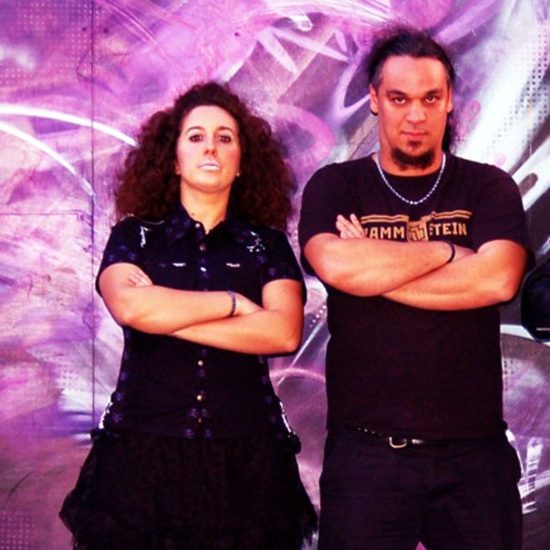
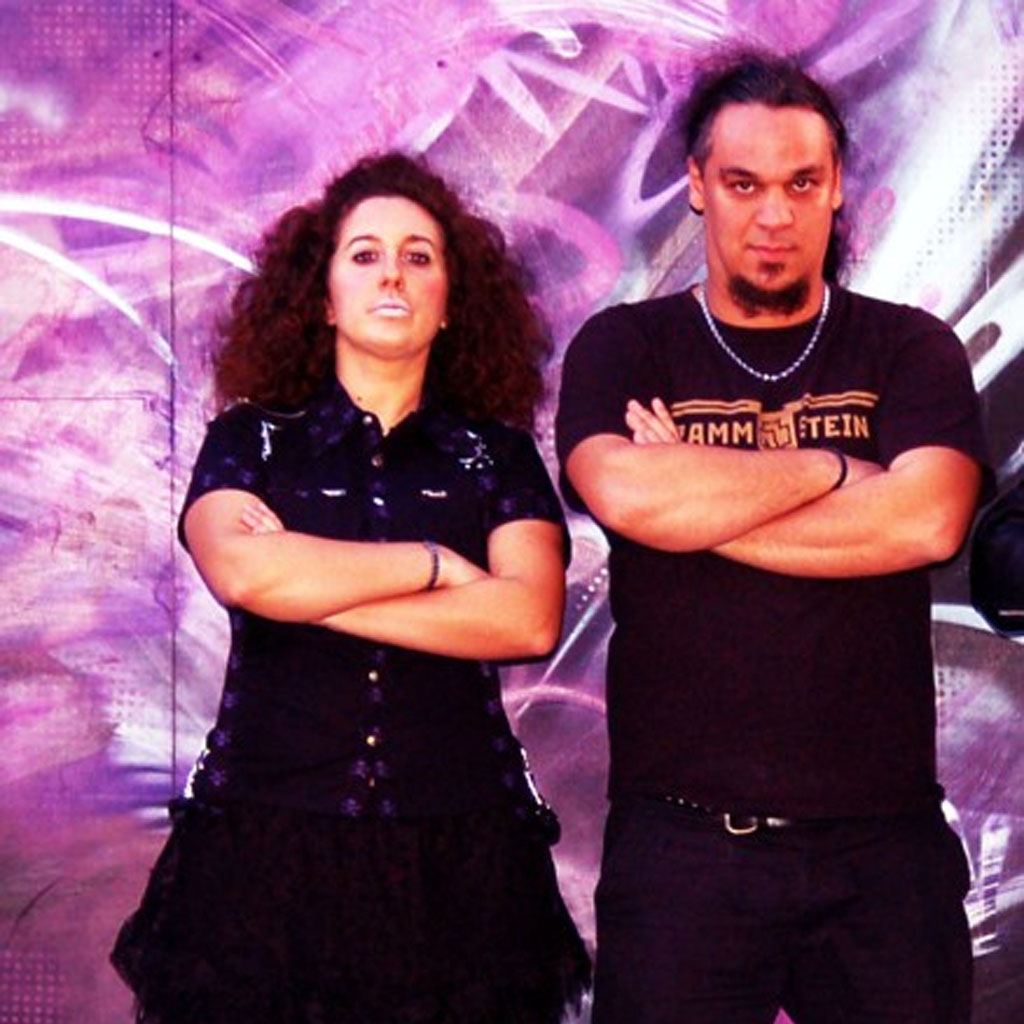
The Irish-Italian industrial metal project EPTA7 was founded in Dublin in 2012. We talk with the two founding members, Gianz and Miss Grey, about their new album, “Here Come the Freaks.”
Orkus: How did EPTA7 come to be founded back then?
Gianz: Before EPTA7, I played in an Italian band called Levania. When my job took me to Ireland, I had to leave the band behind and move to Dublin. Musically, that wasn’t planned at all—if I’d stayed in Italy, I would have continued playing with them. Shortly after moving to Dublin, however, I met other musicians who had very similar musical ideas and, above all, the same desire to do something different. That was actually the beginning of EPTA7. So it wasn’t something I’d carefully planned before moving to Ireland. Rather, it was a consequence of that move: I left a chapter of my musical life behind in Italy, came to Dublin, met the right people, and unexpectedly started a new one.
Miss Grey: My story is quite different from Gianz’s, because I didn’t have any comparable experiences in Italy. I sang occasionally at parties and in youth or cultural centers, but I’d never been part of a band. At the same time, as a metalhead, I’d always dreamed of having my own band. When I moved to Ireland, everything suddenly changed. Ireland gave me the opportunity I’d been waiting for. As EPTA7 slowly took shape, it felt like one of those opportunities you just can’t let slip by.
O: What’s the story behind the name? What does EPTA7 mean?
Gianz: The number seven has been with me for a long time, even before EPTA7 existed. I’ve always been interested in the symbolism of numbers, including their significance in esoteric traditions and Kabbalah—not so much from a religious perspective, but because of the ideas and imagery associated with them. And the number seven is simply everywhere: the seven deadly sins, the seven virtues, the idea of seven as a perfect or mystical number. Even Iron Maiden’s “Seventh Son of a Seventh Son” fascinated me as a teenager. Before I started making music more seriously, I wrote a lot. At some point, I wrote a piece called “Seven Times to Forget.” It was all about the number seven: seven ways to forget, seven ways to remember. Somehow, that number stuck with me. When the opportunity arose to create a completely new band and its own concept, the number seven immediately came back. At the same time, my love for horror literature—especially Lovecraft and the world of Cthulhu—gave rise to the idea of a strange creature associated with the number seven, which was ultimately characterized by seven tentacles. Then Miss Grey introduced yet another element. She is primarily a visual artist and has always been strongly influenced by the poetic, melancholic side of Tim Burton’s world: the “freak” as someone who seems different, strange, and perhaps frightening at first glance, but who is also vulnerable. Take “Edward Scissorhands,” for example: To the outside world, he looks like a monster, but he isn’t the real monster of the story. These ideas eventually merged into the little girl with tentacles who became the symbol of EPTA7. She is not a malevolent creature. She is a freak in the original sense of our world: different, fragile, and somehow caught between beauty and darkness. And finally, there’s the name itself: EPTA is the Greek word for seven, while the number 7 is naturally read as “seven” in English. Greek connects us to Europe’s ancient cultural roots, while English represents the language through which much of modern Europe communicates. This combination seemed particularly fitting for a project whose identity has always been deeply European. So the name EPTA7 is actually a bit redundant: essentially, it means “seven-seven.” But that’s exactly the point. The number seven isn’t just part of the name—it has become part of EPTA7’s mythology.
O: You describe EPTA7 as a world rather than a band. How should someone feel when they enter this world for the first time?
EPTA7: We want people to feel both fascinated and uneasy—as if they’ve stumbled into a place where everything seems familiar at first, but something isn’t quite right. This is especially true for “Here Come the Freaks.” This world is certainly influenced by horror, but we’re much more interested in psychological horror than in monsters, blood, or classic horror imagery. The album deals with fears, past traumas, inner conflicts, and things we sometimes prefer to keep buried deep inside. When you enter this world, you might initially believe that the threat lies somewhere outside of yourself. The city feels strange, the walls seem to breathe, the fog hides something, and familiar places gradually become eerie. But at some point, you begin to realize that the unease doesn’t come exclusively from the outside. The world of EPTA7 seeks to reconnect you with your own inner demons: fears you thought you’d long since overcome, memories you’ve repressed, or even wounds you didn’t even know were still there. That’s exactly the feeling we want to evoke. The most terrifying monster isn’t necessarily the one standing right in front of you—sometimes it’s the one that the outside world forces you to discover within yourself.”
O: So the freaks aren’t just monsters; they reflect human fears and inner demons. What kind of demon lurks inside you?
Gianz: That’s a tough question, because I probably have quite a few of them! If I had to pick one, I’d probably say loneliness. And the crazy thing is, I have a contradictory relationship with it. I often seek out solitude; I need moments when I can withdraw from everything and be completely on my own. In a way, it’s a place where I feel at ease. But that same solitude, which can be a refuge, can also become something painful. There’s a very fine line between choosing to be alone and the moment when you suddenly realize that you feel lonely. Perhaps hidden within this feeling is also the fear of being forgotten, abandoned, or simply no longer noticed by the people around you. I think these feelings are much more closely connected than we sometimes realize.
Miss Grey: I’m not sure if I can give my inner demon a single name, but when I look back, it probably has to do with the fear of being excluded or feeling like I don’t belong. This feeling has been with me since childhood. I was often seen as the one who was different—the girl who dressed differently, listened to different music, and had interests that didn’t necessarily match those of the people around me. I often felt like an outsider. That’s why my early school years—up until I was about 16—were pretty difficult and, at times, even traumatic. When you spend a significant part of your childhood and adolescence feeling like you’re somehow on the outside looking in, I believe that part of that experience lingers into adulthood. At the same time, this experience may also have helped shape me into the person I am today. Being different made life harder for me when I was younger. Later, however, I began to understand that this very difference is also part of my identity and my creativity.
We will continue our conversation shortly.
Claudia Zinn-Zinnenburg
Lineup:
Miss Grey – bass, backing vocals
Gianz Vukodlak – drums, percussion, sampler, backing vocals
Watch the official video for “Fallen Gabriel”:
Already subscribed to our newsletter?

Choose your favorite CD as a subscription bonus: