EWINIAR in an interview
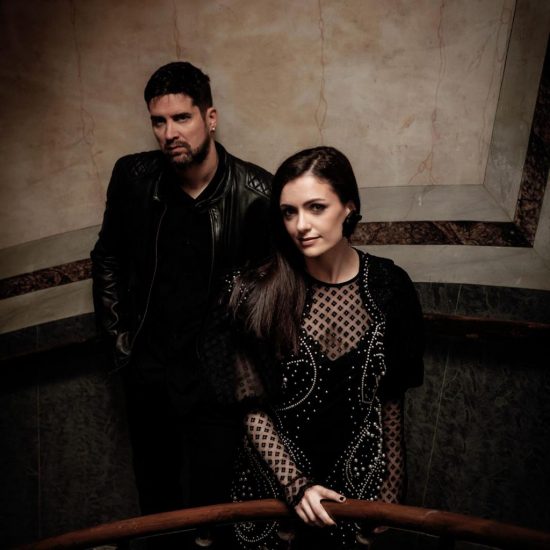
The beginnings of Ewiniar date back to 2017. However, the project only really took shape during the coronavirus pandemic. Marin summarizes: “In the beginning, we didn’t have a fixed idea of what the end result would sound like – apart from a clear leaning towards darker, more melancholic atmospheres. Throughout the process we tried different directions, but our intention was always to keep the music honest and minimalistic, within our musical capabilities and personal sensibilities.” We talk to the duo about the new single “Fractured Harmony”, inspiration and the gothic scene in their home country Croatia.
Wind and thunder
Orkus: How did you come up with the band name Ewiniar?
Marin Tramontana: The name came from a source that felt both symbolic and intuitive. We came across Ewiniar, which is supposedly the name of a god of thunder in Micronesian mythology, and there is also a typhoon with the same name. That immediately appealed to us. Our surname Tramontana refers to a north wind, so the connection to natural forces – wind, thunder, movement – fitted very well. We also liked the fact that the name is short and direct and doesn’t refer to a specific genre. This gives us complete freedom to shape the sound and let the music define the meaning of the name, rather than the other way around.
All in defiance
O: You are a couple, right? Is it difficult for you to reconcile your private life and music, or does it all merge together?
Katarina Tramontana: Yes, we are a couple. We’ve been together since 2015 and married since 2019. It’s not always easy to balance our private lives and music, especially in the last two years, as we both work full-time and are raising a small child. Nevertheless, the motivation has never gone away – if anything, it has become even stronger. We make music whenever we can, despite the circumstances, and that’s why we’re so proud of the upcoming single and album. They exist because we really wanted them to.
Soundtrack of life?
O: Which bands have influenced you in particular?
KT: My relationship with music is very broad and deeply intuitive. I have been immersed in it for as long as I can remember and experience it primarily through emotion and imagery rather than genre boundaries. I’m endlessly curious, so it’s never easy for me to limit my influences to just a few names. However, when I focus on the artists I’ve been listening to since I was a teenager, one band in particular stands out: Paradise Lost. To me, they represent emotion and authenticity – sometimes I like to say that their music feels like the official soundtrack to my inner world. I feel so strongly connected to it that the music unfolds for me in vivid, cinematic images. In addition, artists like Dead Can Dance, Depeche Mode, Type O Negative, Morphine and Nick Cave have left a lasting impression on me. My playlists also include David Sylvian, The Sisters of Mercy, Fields of the Nephilim, Death in Vegas and many others. I recently listened to the album by Macedonian ethno band Anastasia again, which reminded me how important it is to return to the music I discovered a long time ago. In the end, I have to admit that everything I listen to influences me in some way – consciously or unconsciously – and that this ongoing dialog with music is an essential part of my personality.
Opposites that belong together
O: The new single is called “Fractured Harmony”. Musically, the song is anything but a “fractured harmony”. What is the song about?
KT: “Fractured Harmony” is less about musical dissonance and more about an inner state. Lyrically, the song is about opposites that exist side by side instead of canceling each other out: Fragility and strength, closeness and distance, order and emotional turmoil.
Coherence in contrast
O: Is there a story behind the creation of the song?
MT: Yes, there is, but it’s less a single story and more a process. “Fractured Harmony” came about gradually, through experimentation and small moments of inspiration. We worked on the music and lyrics in fragments and let the ideas develop naturally over time. The song reflects a state of tension and balance that we were exploring – the feeling of holding opposing emotions together. In that sense, the creation itself reflects the theme of the song: it’s about finding coherence in contrast.
Inspiration
O: If you can generalize at all, where do you find inspiration?
MT: Inspiration can come from almost anything around us – our own emotions, the emotions of others or even fleeting moments we observe in daily life. We are drawn to the subtleties, the small tensions and contrasts that often go unnoticed and try to translate them into music. Ultimately, it’s about capturing the essence of a feeling or a moment and translating it into something that goes beyond words.
Sounds of home?
O: You live in Croatia. What is the goth scene like there?
MT: The goth scene in Croatia today is not very big or particularly active, but it has a dedicated core of passionate people. There are local bands and projects, even if some of them are no longer active. One of the best known bands is Ashes You Leave, which has been active since 1995. Gothic nights used to take place regularly in Zagreb and Split, but over the years interest in the scene has waned. I think this is partly true for many subcultures – they often reflect the spirit of a certain time and place. However, there are still incredibly talented musicians in Croatia, even if they are not strictly speaking part of the gothic genre. Artists such as Jelusick, Manntra and Kryn are excellent examples of creativity and dedication that deserve recognition.
Music of the future
O: What are Ewiniar’s plans for the future? Is the single also a harbinger of a new album?
MT: Yes, we plan to release the album in late 2026, and the single offers a first glimpse of the direction we’re moving in. Over the last year we’ve focused on refining our sound and exploring new ideas, so the album represents a very personal and carefully considered step forward. Of course, we’ll see what opportunities come our way in the future – if the right conditions are there, we’ll take them.
Claudia Zinn-Zinnenburg
Line-up:
Katarina Tramontana – vocals, lyrics
Marin Tramontana – guitars, bass, keyboards, music, arrangements
Listen to Ewiniar in our “Dark Rock” playlist on Spotify: