Interview with DAMIEN CAIN (2/2)
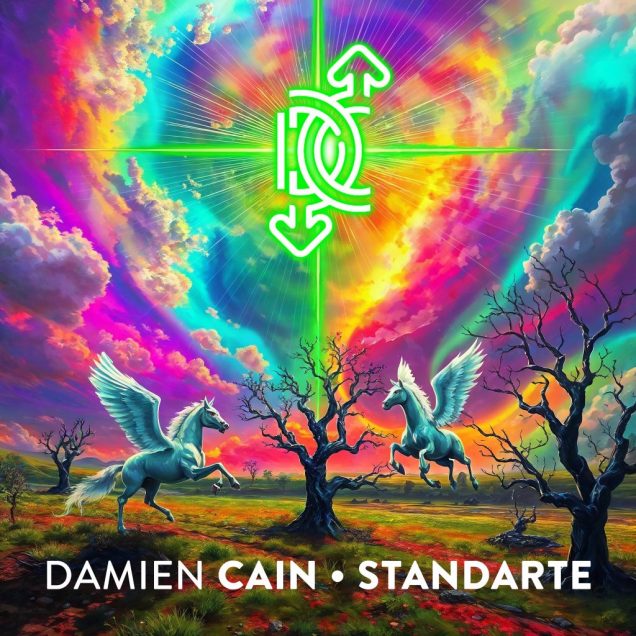
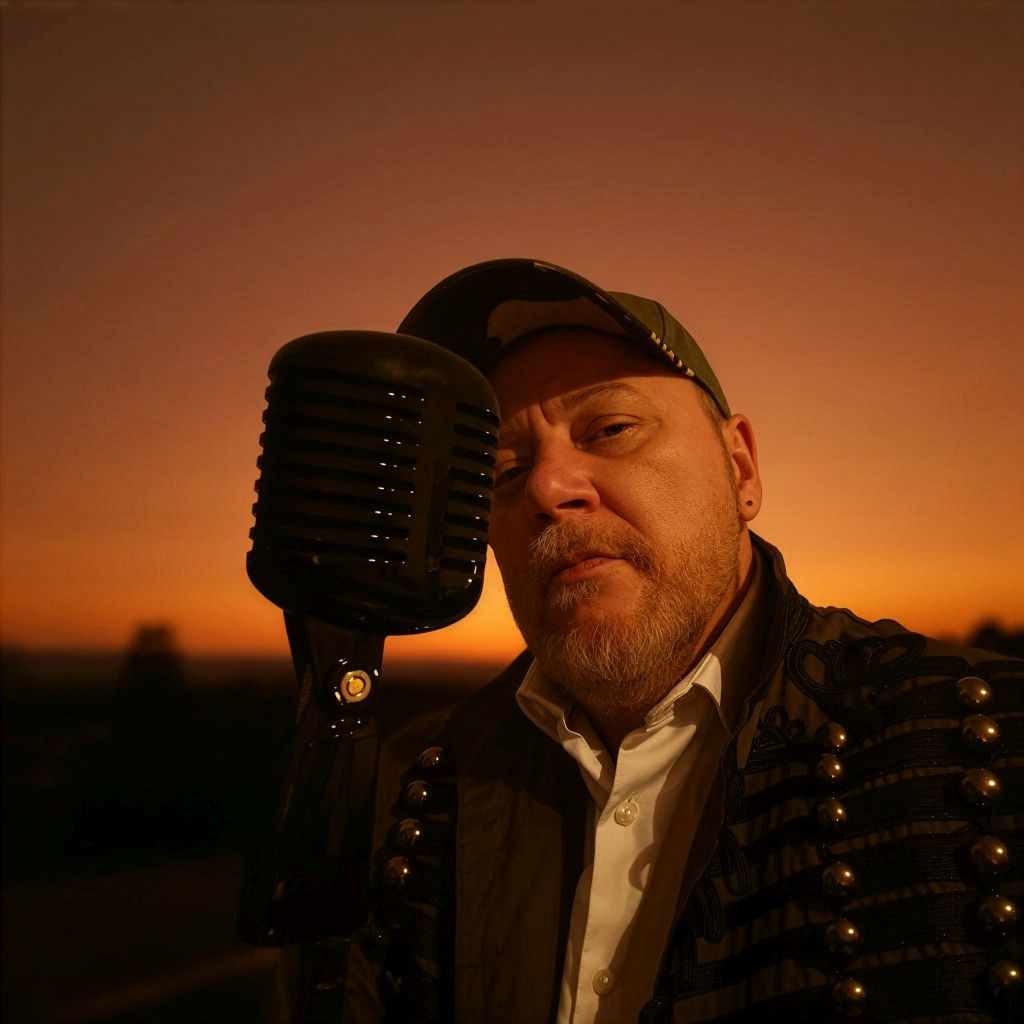
Damien Cain has realized a wide variety of projects in his more than 30-year musical past. He is back with his latest album “Standarte”. In the first part, we talked about melancholy, working with an idol and much more. This is where we continue now.
Writing from the soul
Orkus: The album starts with “Fascinating Face”, for which there is also a great video. I’m sure many people know the feeling of being caught between longing and not wanting to admit that it’s actually long gone. How personal is this song really?
Damien Cain: Oh, it’s one of the most personally biographical songs on the album. I can very specifically name the place and time and even the weather (misty drizzle, of course) when I shouted at myself, “Stop kidding yourself, you’re still in love!” … it was such a strong emotion that lingered for a long time and I finally had to get it off my chest.
Tools
O: You use AI for the latest videos. A topic that is currently on everyone’s lips. On the one hand, it’s a useful tool, but on the other hand, it’s also subject to criticism when we think about AI and art. How do you see it?
DC: As with so many things in life, there are two sides to everything. The last videos by Cain or even “Fascinating Face” or “Standarte” would not have been financially viable as a real realization for an Indi artist (at least not with the images I have in my head for the videos). What AI can’t (yet) do is give songs a soul. The same goes for writing song lyrics, even books etc. As a helper and supporter I’m fine with AI, replacing an entire creative process with it just makes me very sad because at some point we’ll realize how much the quality suffers.
Touching
O: I found “Caleb” particularly touching. Was the song written with the knowledge that it needed an additional voice, which Jamie Wiltshire then contributed? Or did that develop first?
DC: To be honest, I actually wanted to give the song to Jamie because I think he interprets it fantastically. In the style of Cain, Kirstin also had a few solo songs here. But since my vocals were recorded, we played around a bit in the studio and so Caleb (also a real memory – but with a different real name, for the sake of the final rhyme) became a male/male duet, which for me simply gained depth and credibility thanks to the two voices.
Homage to EBM?
O: Musically, I was particularly surprised by “Mountaineers”. How did this piece come about?
DC: “Mountaineers” was actually supposed to be a musical homage to EBM, which is also a style of music that I really like. – It’s very technical and danceable. Based on my “Age of Darkness” vocals (doubled, distorted, deep, distorted and a bit “overproduced”), it wasn’t supposed to be a successor, but a reminder of the old song. But when the first soundtracks with hard guitars arrived, I found them so convincing that the danceability had to be limited to the bass line and the arpeggio keyboard.
25 years of “Age of Darkness“
O: There’s also a new version of “Age of Darkness” for its 25th anniversary. That song went through the roof back then! Could you have guessed that when you wrote it?
DC: I couldn’t have planned for the song to hit like that, but it changed my life forever.
On “Standarte” you can “only” hear the remastered version of the song from the year 2000. We already released a new version on the album “Moonstruck” and I didn’t want to make a personal TikTok challenge out of reinventing the song over and over again. But because it was no longer available on streaming, I took the opportunity to re-release the old original for the anniversary. The success of the song was completely unplanned. Of course we thought it was great when we produced it back then, but that’s probably the case for every band with every new song. – Unfortunately, it’s no guarantee of success. But when you hear your own song for the first time in a disco (it was the Matrix in Bochum), then you realize that it could be more than just a hobby. But you can neither plan nor anticipate that, but the hope is of course omnipresent.
Life in Ireland
O: You’ve been living in Ireland for a few years now, haven’t you? I think many people have a romanticized image of pubs and Irish folk music and perhaps think of the series “Guinness”. How can we imagine “the scene” and life in comparison to Germany?
DC: Ever since I first visited Ireland in 1991, I was shockingly in love with the country and its people. And yes, this romance really does exist, and not just for tourists. Monastery ruins, Celtic round towers in the mist, lonely beaches, miles of solitude – it’s all real! The pubs in particular work differently to German pubs, because old and young sit together and enjoy a pint as a matter of course. And yes, it does happen that a guest picks up a guitar and spontaneously starts a session. The Irish really are exceptionally musical and interested in music, not just folk of course, and the number of small and large concerts that Irish people attend each year is enormous. However, you have to search a long time to find a club that plays rock or even gothic music. Perhaps that will change after Bambie Thug’s surprise success at last year’s ESC.
Extinct species?
O: It would be difficult to put a genre stamp on “Standarte”, but it doesn’t have to be. In this context, you asked who still listens to an album from start to finish these days. In other words, that there can definitely be this great variety. Is that something you don’t do yourself (anymore?), really listen to albums from the first to the last song?
DC: Yes, I do that and thought I was a dying breed because of it. (winks) A little dig at the TikTok generation with its five-second attention span. I’m a big fan of concept albums, for example. If you like, the Cain album “Moonstruck” was also a kind of concept album, the songs are interwoven in terms of content and are categorized as a continuous story through the spoken introductions by Wayne Hussey. Inspiration for this comes, for example, from Marillion’s “Misplaced Childhood” or Queensryche’s “Operation Mindcrime”. For me, it would be a crime to listen to just one song from these albums without context. Preferably with headphones on a lonely Atlantic beach at sunset, a Guinness in hand.
View of the future
O: What does the near future hold for Damien Cain? What is planned next?
DC: Well, a few songs didn’t make it onto “Standarte”, so I still have to work on those – and I’m already writing more songs, so in total there’s material for another album. Well, and then there’s the question of “live”. – Impossible to do with my guest musicians, of course, but my fingers are itching to get back on stage. I just have to figure out the “how and when”. But it will definitely go ahead!
Claudia Zinn-Zinnenburg
Watch the video for “The Last Dance”: