
Interview with DEKAD (2/2)

Dekad was originally founded in France in 2000 as a quartet. Their first album, “Sin_Lab,” was released in 2005, followed two years later by their second, “Confidential Tears.” A hiatus followed until 2009, when Jean-Benoît Lacassagne revived the project on his own. We’re discussing the new album, “A Distorted View,” in two parts. Did you miss the first part? No problem— you can read it here.
Orkus: “No Human” has a very dystopian feel to it. How did this track come about?
Jean-Benoît Lacassagne: The song was inspired by observations of the world we live in. Technology is deeply integrated into our daily lives and opens up incredible possibilities, but at the same time raises questions about identity and human connection. “No Human” explores the idea of a world in which precisely these essential human qualities are gradually being lost. The song is dystopian, yet at the same time rooted in concerns that already exist today.
O: What makes you get up every morning, despite everything?
JBL: Curiosity, above all. Today, I probably have more questions than answers—and that’s not a bad thing. There’s always something new to discover, create, understand, or question. Music remains a constant source of motivation because every song offers the chance to explore an idea from a new perspective. As long as there are questions worth asking, there are also reasons to keep going.
O: Overall, the lyrics on the album seem very reflective. To what extent does each song perhaps reveal something personal about you?
JBL: There’s a part of me in every song, but not necessarily in a literal way. I write about ideas, emotions, and observations that resonate with me. The older I get, the more I’m interested in asking questions rather than delivering messages. The album reflects many of my thoughts and reflections, but I hope I’ve left listeners enough room to find their own meaning in the songs.
O: How can we picture the creative process behind “A DistortedView”? What was the biggest challenge, and how did you overcome it?
JBL: The process usually begins with a mood, a sound, or a musical motif. From there, the songs gradually reveal their identity. Since I write and record the material myself, I enjoy a great deal of creative freedom, but I also bear the responsibility of remaining objective. The biggest challenge was maintaining enough distance to evaluate the songs critically and ensure that each track has its own character while still contributing to the overall atmosphere of the album.
Claudia Zinn-Zinnenburg
You can also find Dekad in our July/August issue:
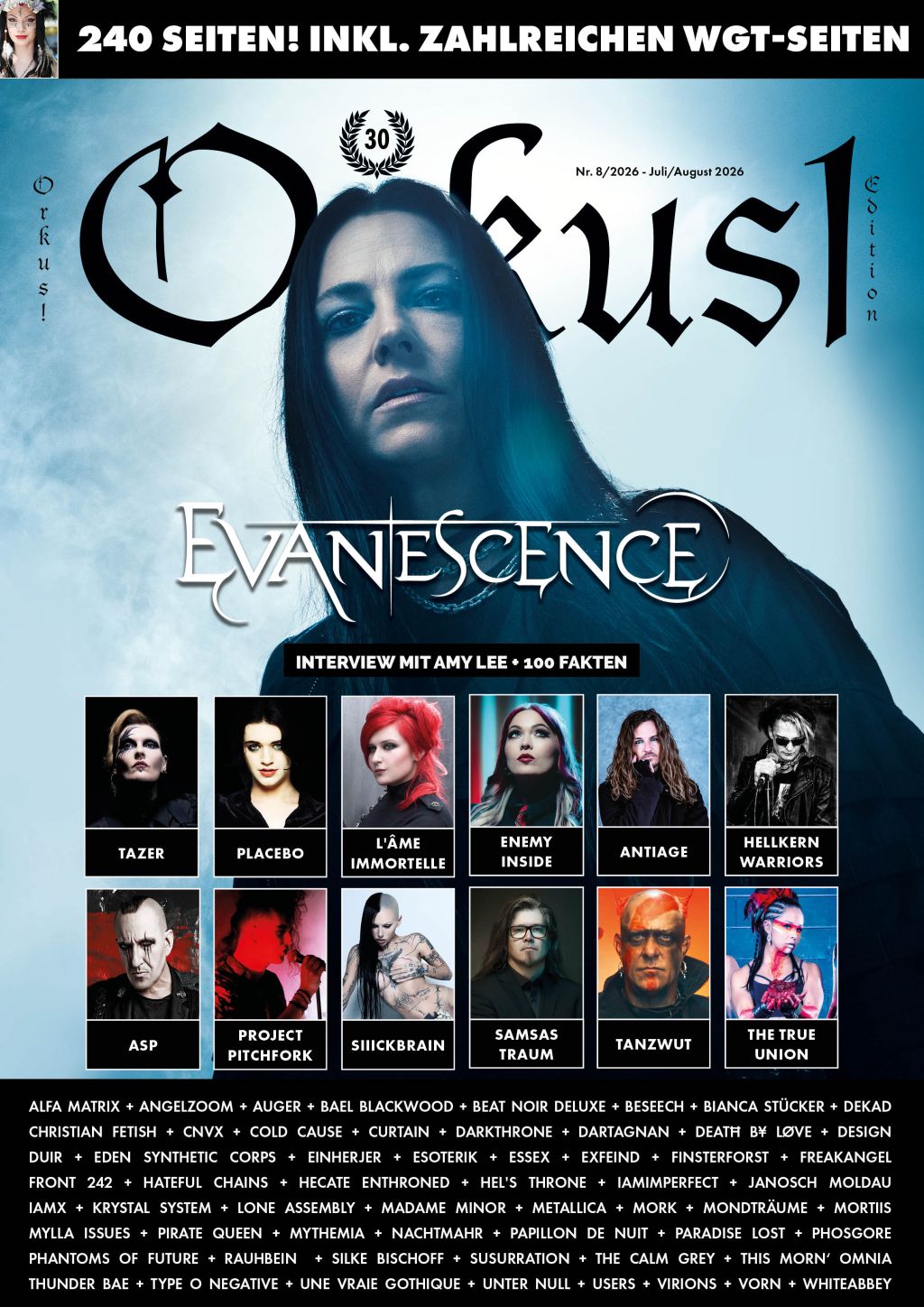
DieSommerausgabe bestellen:
Listen to Dekad on our “Current Issue” playlist on Spotify:
Schon unseren Newsletter abonniert?
Hier kannst Du das gedruckte Orkus!-Magazin abonnieren:


