Interview with KILLING KIND (1/2)

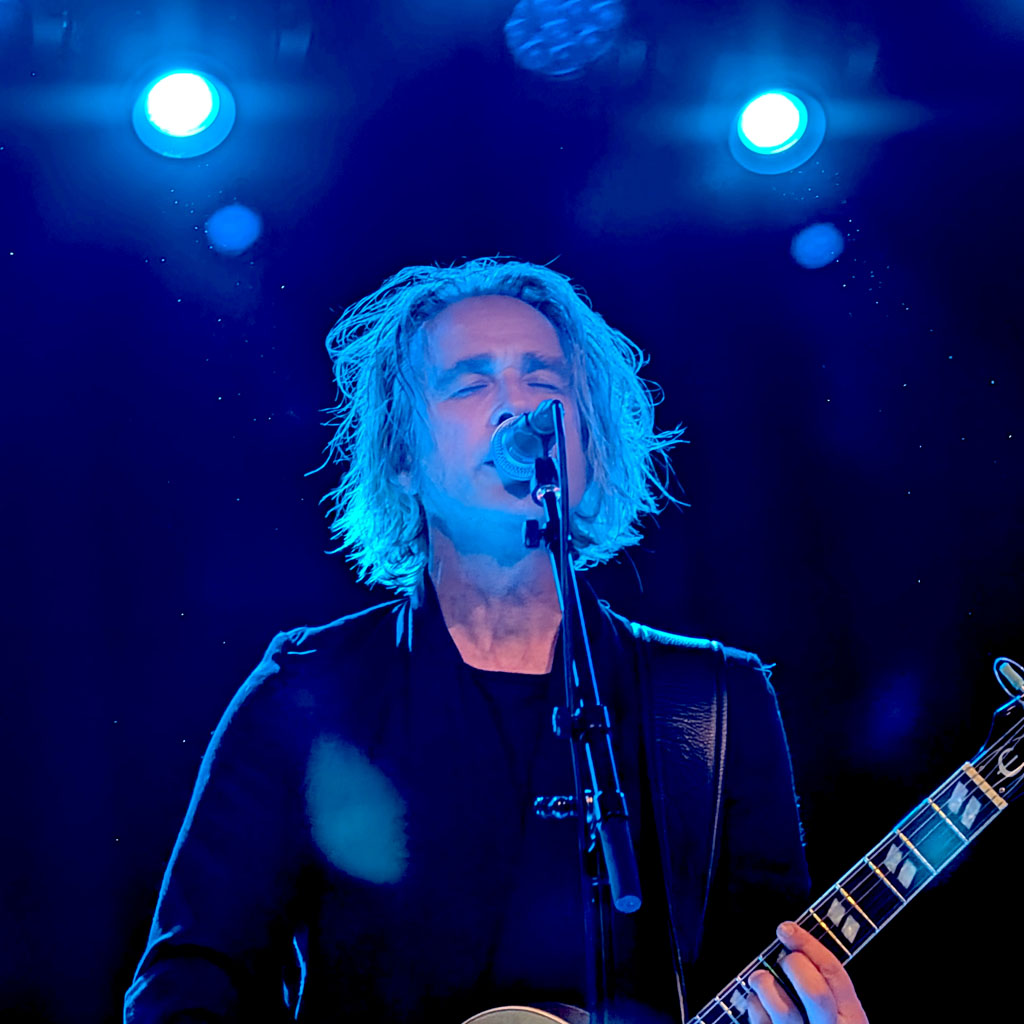
Killing Kind was founded in 2021 and has been breathing pure post-punk since the release of their first, self-titled album in 2023. We talk to mastermind Börn Norberg about the second album “Being Human” and the creative chaos involved in the creation process.
Being human?
Orkus: “Being Human” is an extremely powerful album title. How did this come about?
Björn Norberg: For a while, the working title was “Human Monsters”, but “Monsters” was a bit too explicit. Since the lyrics on the album deal with our worst and most destructive sides and question what humanity can mean, I started playing with “Human Being” instead and simply changed the order of the two words. “Being Human.” This opened up more and broader interpretive possibilities and opened up both the destructive sides and the vulnerable sides of what it means to be human. The lyrics very much reflect larger and global perspectives, but I also want them to describe the inner darkness, weaknesses and hope. It should be possible to translate the inner struggles to a global level and vice versa.
(Not) an artificiality
O: What does it mean to be human today, in a world that is increasingly dominated by AI?
BN: The flip side of the internet is conspiracy theories and false and alternative facts. There are parallel realities, and what is real and authentic is mixed with fantasies. And then there’s AI … It worries me that it will soon be impossible to distinguish between true and false. This creates a very bleak future for humans when it is impossible to understand reality. AI-generated material is already everywhere. I really hope people in general start seeking out authentic art, going to concerts, listening to real artists, going to the theater and avoiding the AI crap. Meeting a real person is such a much greater experience than what you get on social media or chatting with bots.
Creative chaos?
O: “Being Human” is your second album. How did the working process differ from your first album?
BN: It was a bit similar but much more complicated as we had added too many instruments and worked in different studios and sent everything to Sunlight and Tomas Skogsberg who had big problems mixing it into something listenable. The process started as usual with me writing the songs on guitar or synthesizer. Then I recorded a demo in my home studio, using a simple drum pattern to set the tempo and structure of the song. Then I sent everything to the drummer Mats Molund, who recorded the drums in his studio and mixed everything for the first time, but without the synthesizer. This was sent to Mats Wigerdal, who added the synthesizers in his studio. Now all the drum and synth files were sent to Sunlight, where poor Tomas struggled to mix the synths and drums into something intelligible. He wrote to me a few times: “You have to come over. I don’t understand what you’ve recorded.” When all the stems were done, about 60 to 70 per song, I was able to start recording the guitars and bass and finally the vocals. It took a year longer than expected. We need to develop a better process …
From walls
O: I was particularly moved by “The Wall”. Is there a story behind it?
BN : We had finished recording all the guitars and most of the bass tracks for the album, and I was packing up my gear. When I picked up the guitar to put it back in the case, I accidentally played a few notes that I liked. Instead of putting the guitar in the case, I immediately wrote the verse and chorus and asked Tomas to record it. He said, “No way, we’ve finished the album!” So I recorded the guitar at home in my own studio and asked a jazz pianist who is a neighbor of a friend to record the piano, and I recorded the viola with Lidija, a friend of the drummer Mats. I took the song back to Sunlight to record the vocals and bass (played by Måns Hartman). Eventually Tomas was convinced that the song should be on the album. I can’t remember how the lyrics came about, but it’s a reaction to the wall between the US and Mexico, but also to walls we build between people. It’s definitely about hate and how people seem to get energy from hating and blaming others. It’s an example of how texts can work on both a global and personal level. How states act against each other, but also how people act against each other.
Anti-nostalgia?
O: What do you associate with the eighties? Was there anything that you think was better back then than today?
BN: It wasn’t better, but the music was! The Cold War, the Iron Curtain, Thatcher, Reagan … Those were also bad times. When Russia opened up and the wall came down, everything got better. But the music got bad! It’s hard to listen to almost everything that was recorded between 1987 and 1992. Our dark times correspond to the dark times of the early 1980s, and the music that was made back then fits in well with current developments.
Claudia Zinn-Zinnenburg
Line-up:
Björn Norberg – vocals, guitar, bass
Mats Wigerdal – synthesizer
Mats Molund – drums
Fredrik Carlqvist – bass (live)
You will soon find part 2 of our interview here. You can expect even more information in our March/April issue.
Watch the video for “The Wall” here: