Interview with MYSTIGMA (Part 1/2)
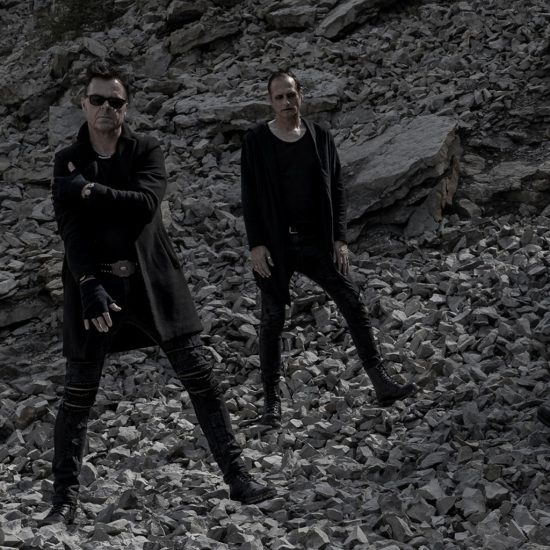
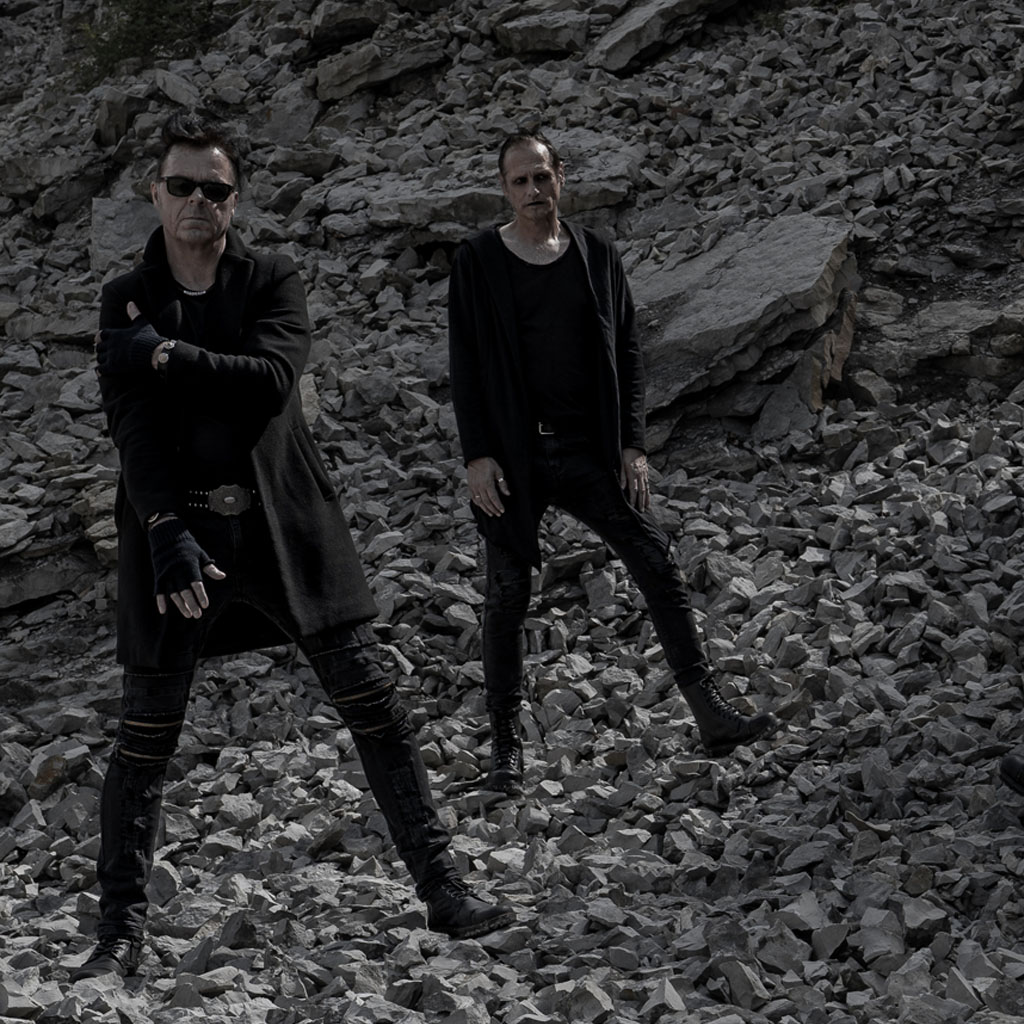
We talk to Jörg and Torsten Bäumer about the new Mystigma album“Gloomtown Radio”. But wait a minute, isn’t there also a special anniversary to celebrate in 2025? – After all, the band has existed under this name for 20 years now. But their shared musical past goes back much further …
A new beginning?
Orkus: I saw that Mystigma will be celebrating its 20th anniversary in 2025. Do you see it that way at all? After all, Tears of Mystigma was founded in 1993 and has evolved since then, but apart from the shortening of the name, the essence has always remained the same. Right? How did the name change come about in the first place?
Jörg Bäumer: We almost only noticed in passing that 2025 was the 20th anniversary under the Mystigma flag. That’s because we don’t attach much importance to such things. So numbers, anniversaries etc. are not important to us. Although it was quite fitting with the release of our new album. The time before that belongs to us and we don’t deny it. When we started out in the 1990s, we were still very young and mostly just made noise with less ambition for higher things. In retrospect, that was sometimes a bit weird. That changed around the turn of the millennium, when we played festivals for the first time and came into contact with well-known artists. After a certain turbulent phase of discovery in our lives, both musically and privately, we then made a kind of new start in 2005. The band name was too long and cheesy for us at the time, which is why we shortened it. In fact, it wasn’t such a bad decision at the time, as we had already established a certain standing in the underground under the old name.
Change
O: When you think back to your beginnings … what are the biggest differences compared to your band beginnings?
JB: At the very beginning, there were many more opportunities to play live. There were still a lot of smaller clubs that regularly organized concerts. We were friends with bands and we invited each other to concerts. That always worked well and many people who were active back then still remember that. Basically, the whole live sector has changed completely; clubs have closed, ticket sales for smaller bands are often not good enough, so gigs or entire tours have to be canceled, etc.
There are also a lot more bands today than there used to be. The opportunities to produce and publish something yourself have changed fundamentally thanks to digital progress.
Nowadays, an incredible amount of music is being thrown onto the market, with around 100,000 songs being added to Spotify alone every day. Then there’s the topic of AI in music, where nobody knows exactly where it’s all going to lead.
We as musicians and people have also become more mature, more reflective and better.
For the ear: depth and power
O: How did you decide that “Gloomtown Radio” should be the theme song?
Torsten Bäumer: I think that “Gloomtown Radio” is a central song on the album that combines everything that makes Mystigma what it is. This melancholy and depth, but also heaviness and power. The song title and the idea for the lyrics were already in place before the song was written. When Jörg presented the song to me, I realized relatively quickly that this song would be “Gloomtown Radio” and would also be the album title.
For the eye: Atmosphere
O: The album cover is also very atmospheric. What are the thoughts behind it?
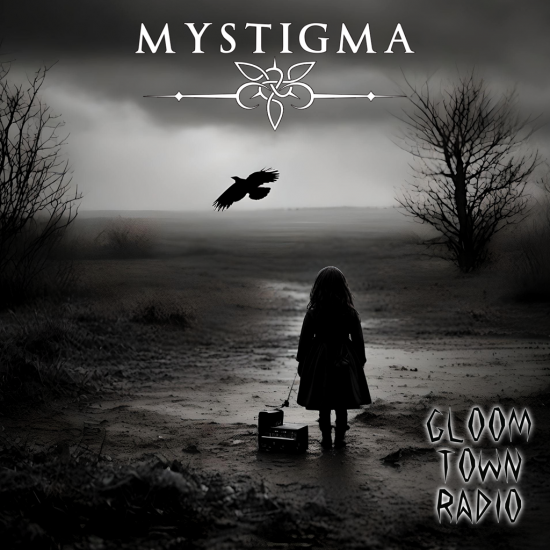
TB: Ideally, an album cover represents the musical and lyrical direction of an album. That has always been important to me. On the cover you can see this atmospheric landscape, a raven and this doll-like girl with the “Gloomtown Radio”. It’s supposed to embody a thoughtful and dark atmosphere, but also hope. This concept is continued on the back cover and in the inlay. Atmospheric artwork that goes well with the music and lyrics has always been important to us.
Experimental
O: The album begins wonderfully melancholy with “Fremdes Ich”. How did this song come about?
JB: No different to anyone else. It always starts with an idea that you don’t immediately know whether it will turn into something good. With “Fremdes Ich”, it was the acoustic guitar theme that served as the starting point. I made a sample over it and continued the song. The song is quite short and I think it has a dystopian atmosphere. The lyrics go very well with the music. It’s not a typical opener, but a bit more experimental. We found it exciting to open the record with it.
Characteristic melancholy
O: Melancholy runs like a red thread through your discography. Would you describe yourselves as melancholic?
TB: We are certainly not “sad dumplings” who go to the cellar to laugh, but simply thoughtful people who go through life with their eyes open. But anyone who knows us knows that we are also very communicative and humorous. Even if our humor can sometimes be quite black. But then again, that fits in with the music. Ha, ha. We simply have a soft spot for this melancholy, gloomy sound that shaped us early on in the nineties. I’m thinking of bands like Type O Negative or Paradise Lost.
O:… But in what way is that perhaps a good thing?
TB: I believe that thoughtful people are more likely to develop empathy for their fellow human beings than superficial people. At least that’s my feeling.
Ephemerally valuable
O: I think the image of dancing in the rain of ashes, as sung in “In Memoriam”, is particularly successful. In other words, facing the downfall with a smile – or dancing, as it were. A positive approach, if you like, isn’t it? Can you really see it that way?
TB: Yes, we actually see it that way too. “In Memoriam” paints a picture of a life whose peace of mind was shattered by social expectations and deep inner doubts. But memory reveals that even an unremarkable life holds traces of meaning. Delicate, fleeting and yet of undeniable value.
O: If the world were to end tomorrow, how would you spend your last day on earth?
JB: With the family, with everyone you love. Spending quality time, full of harmony, without resentment and disappointment towards others or missed opportunities in life. Being at peace with yourself and accepting what comes.
Cold!
O: In “Erfroren”, a certain inner coldness also comes to the fore for me. I don’t know if I’m going too far out on a limb here, but could it also be seen as a reflection of society? Where there is more pretense than reality?
TB: Yes, you have recognized and interpreted that very well. It’s about a person who has had fateful experiences at a very early age and as a result loses their footing more and more in the “coldness and superficiality of society” until they are “frozen inside”, so to speak.
In the spotlight
O: What is “Gegengift” all about? – And what does the spotlight do to you?
TB: To be honest, we enjoy the spotlight when we’re in it, ha, ha. Who doesn’t want attention when they’re making music or doing some other form of art? But the song is more about the “addiction to attention”. Once you’ve got it, it’s hard to escape. The song describes a kind of “vortex of dependency” that you can get into and for which there is no “antidote”. This is a phenomenon that can be observed more and more today, when our entire existence is dominated by social media. There are some harsh and deliberately exaggerated metaphors in the song. This is quite intentional in order to emphasize the seriousness of this topic.
In the next part, we talk to Mystigma about occult romance, inspiration and madness and much more.
Claudia Zinn-Zinnenburg
Line-up:
Torsten Bäumer – vocals, lyrics
Jörg Bäumer – guitars, keyboards
Stephan Richter – bass
Malte Hagedorn – drums
Read the review of “Gloomtown Radio”:
Listen to Mystigma in our “Dark Rock” playlist on Spotify: