
FLESH TUNNEL
SPONSORED POST/ADVERTORIAL
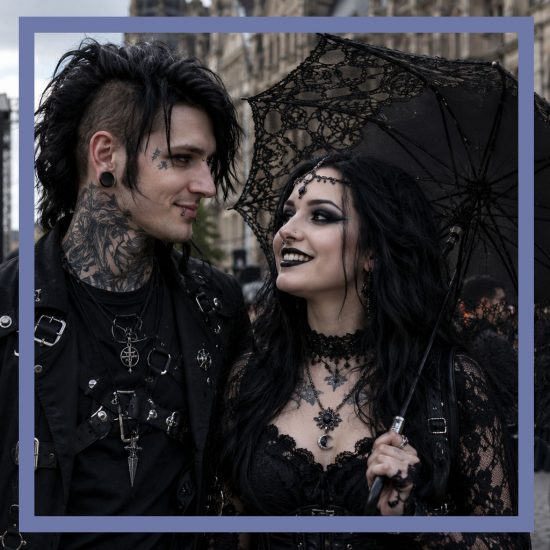
Tattoos, Piercings, and Dark Aesthetics: How Body Art Became Part of the Scene
In the Black community, black has never been just a color. Black was a stance. An expression. A silent “No, thank you” to the slick, uniform look of the outside world. And that is exactly why tattoos, piercings, and unconventional body adornments have been an integral part of the black scene and culture for decades.
Anyone who has ever walked through Leipzig at night during the Wave-Gotik-Treffen knows this scene: heavy boots on cobblestones, the scent of incense in the air, dark synthwave drifting out of a bar somewhere—and amid the velvet, leather, and lace, silver piercings, tattooed hands, and stretched earlobes catch the eye. Body jewelry has never been merely decorative in this scene. It is part of one’s identity.
The Body as a Canvas of Darkness
Even the early goth and post-punk movements relied heavily on visual presentation. Clothing, hairstyles, and makeup were used to consciously break away from social norms. While outside, perpetual smiles, beige, and office attire reigned supreme, an aesthetic emerged within the scene that found beauty in melancholy, transience, and mysticism. And at some point, clothing alone was no longer enough for many. Tattoos and piercings became an extension of one’s self-expression. The body itself became a canvas. Not polished. Not perfect. But individual. Sometimes dark. Sometimes romantic. Often both at the same time.
Tattoos, in particular, quickly became an integral part of the scene. Black ornamentation, cemetery romanticism, skulls, bats, ravens, stained-glass windows, thorn vines, and occult symbols fit perfectly with the atmosphere of dark wave, gothic, and industrial music. While mainstream tattoos often follow trends, many scene tattoos feel more personal and symbolic. They tell stories—or at least hint at them.
Why piercings are a perfect fit for the scene
Piercings, on the other hand, embody precisely this blend of rebellion and aesthetics that has long fascinated many subcultures. Even the punk movement used metal in the face as a deliberate provocation against societal expectations. The goth scene adopted this idea—but turned it into something more elegant, artistic, and often darker. Silver jewelry suddenly harmonized with black velvet, lace shirts, and heavy coats. Lip, septum, and eyebrow piercings became part of a look that appeared cool, romantic, and slightly dangerous all at once.
And then came the stretched earlobes. Straight, large plugs and ear tunnels have become an integral part of many alternative styles over the years. They combine body modification with individuality and fit perfectly with the scene’s dark aesthetic—somewhere between an industrial club night, a cyber-goth outfit, and a Victorian dark romantic look.
Dark Aesthetics: Beauty in Imperfection
What has made the goth scene unique for decades is its perspective on beauty. While the mainstream often strives to make everything look smooth, clean, and flawless, dark aesthetics frequently celebrate the imperfect, the ephemeral, and the mystical. Scars, black tattoos, stretched earlobes, or heavy metal piercings don’t seem “too much” in this context—they’re just right. They speak to individuality. To attitude. To people who have consciously chosen to be visibly different. And that is exactly why tattoos and piercings in the scene don’t function as fleeting trends. They often become part of a long-term identity. Many people in the Gothic or Industrial scene have been wearing their style for decades—not just for festivals or Instagram photos, but in everyday life.
Between Romanticism and Industrial Noise
It’s also fascinating to see how differently body art is interpreted within the scene. While classic goths often prefer delicate, romantic, or Victorian designs, the industrial or cyber-goth scenes tend to lean toward a more futuristic and extreme aesthetic. There, blackwork tattoos meet cold metal, large tunnels meet neon hair, and leather meets technical elements. The body becomes almost part of a dystopian artistic figure. At the same time, however, the romantic side of the scene continues to exist: delicate tattoos featuring moon symbols, roses, cathedrals, or melancholic quotes. These contrasts are what make dark aesthetics so fascinating to this day. Hardness and fragility. Beauty and decay. Elegance and loss of control.
Why Aesthetics Is Booming Again Today
Interestingly, the dark aesthetic is currently experiencing a major resurgence. Social media has led to gothic, dark fashion, and industrial styles becoming more visible again. Young people are rediscovering the scene—often first through music, fashion, or platforms like TikTok and Instagram. But while trends come and go, the core remains surprisingly constant: it’s still about individuality. About atmosphere. About consciously being different. And perhaps that is precisely why tattoos, piercings, and body jewelry remain so closely associated with the scene to this day. They are not an accessory you pick out in the morning to match your jacket. They are an expression of an attitude. Or to put it another way: Some people wear black. Others live in it.
You can check out the Tunnel Flesh Shop here: Flesh Tunnels
This sponsored post is brought to you by: Miuu GmbH
This sponsored post was sponsored by Miuu GmbH


