
An Interview with L’0nde N0IRe (Part 1 of 2)
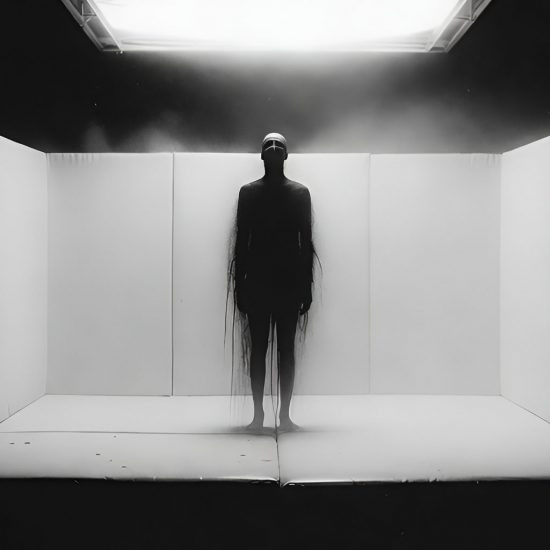
What happens when someone spends three decades immersed in EBM, industrial, synthpop, and dark wave, draws inspiration from Phonk, and ultimately turns AI into a musical tool? With L’0nde NOIRe, the result is far more than just another AI music project. Behind the dark soundscapes lies a sophisticated concept blending philosophy, social criticism, and the question of what actually makes humans human. Read the first part of our interview here.
Orkus: Let’s start at the very beginning: Your project is called L’0NDE N0IRe—“the black wave.” What does this name mean to you?
L’0nde N0IRe: My roots lie in the electrogoth scene, so my first thought was something along the lines of “Vague Noir.” However, practically all similar names were already taken, so I ended up going with the French version. But I also liked it because of the imagery it evokes: crossing a dark wave, almost like crossing the Acheron—the transition from one form of existence to another, ultimately leading to death. So, little by little, the name became more than just a reference to dark wave music. It seemed to fit the atmosphere and philosophy of the entire project. In fact, “passer l’onde noire” means “to die” in French.
O: How and when did the desire to launch this project come about?
L’0nde N0IRe: I’ve been listening to EBM, industrial, synthpop, dark wave, and related music for about 30 years. The actual idea for L’0nde N0IRe, however, didn’t come about until about six months ago. I was watching my twelve-year-old son listen to Phonk, and it suddenly occurred to me that today’s generation has, in a strange way, transformed some of the cold, industrial, and nihilistic energy of old-school EBM into this new, extremely physical form of music. That fascinated me. Then I thought: I don’t have any formal musical training—so why not use AI as a tool to create my own music? I’d already been working with AI for several years anyway. Of course, given everything I’ve listened to over the years, I eventually ended up with dark wave, synthpop, EBM, and industrial. But Phonk is also present in the project, alongside numerous other influences. The truth is: I love practically every form of electronic music.
O: Your music is powered by AI, but of course it’s not as simple as just entering a few keywords and getting a finished song. There’s a lot of hard work and passion behind it. Can you explain how the creative process for your songs works?
L’0nde N0IRe: If you’d like, I’ll let you in on my creative secret. (grins) It all starts with the central idea—the concept. All my albums are concept albums. They have symbolic, allegorical, and philosophical dimensions that are reflected in both the music and the lyrics. Each album attempts to say something about today’s reality, often from the perspective of thinkers like Orwell, Baudrillard, and Guy Debord, but also influenced by existentialism and a more fundamental critique of modernity. Essentially, it’s a critique of the present and of the world we live in.
But I don’t view existentialism—or even nihilism—as exclusively pessimistic. At its core, I believe there is something deeply humanistic about it: beneath the initial darkness lies an optimism, the possibility that humanity can ultimately prevail. “L’existentialisme est un humanisme,” as Sartre said. Once the original idea and the title are set, the structure follows. The album represents a journey—usually from dark to even darker—and each track contributes to that journey. Each song has a specific meaning and its own musical language that serves its purpose. The artwork for the album and the individual tracks is also part of the same process. In short: I like to think that nothing happens by chance.
As far as the actual musical production goes, I’ve gotten pretty good at formulating prompts. This allows me to get very close to the genre, atmosphere, and style I’m looking for. For each section of a track, I use detailed instructions and even specify what kind of vocals I want in each passage. Usually, I start by creating 20 or 30 versions of each song. I listen to them carefully, select the one that best captures the original idea, and then go through an extensive editing process before the final version is ready to be shared with you.
O: Let’s talk about the album “Tech N0ir.” It ends with the title track, which is particularly fascinating. How did this song come about, and why do you think it represents the album so well?
L’0nde N0IRe: The original idea behind “Tech N0ir”—obviously inspired by the fantastic Tech-Noir nightclub in “The Terminator”—was to portray our world as one increasingly dominated by technocracy, experts, manipulation, external control, and propaganda. It is a crumbling world, and the album follows a journey through it. We begin by coming to terms with our own situation in “Existence,” the opening track, and then move through obsession, chaos, addiction, therapy, pain, trauma, fear, and breakdown toward death. Yet at the heart of the album lies a paradox. Our obsessions, addictions, complexes, and imperfections are, at the same time, part of what makes us human. The increasing medicalization of everything, coupled with the promise that everything can and should be “treated,” ultimately leads to our complete breakdown. The album therefore proposes a different form of therapy: music. More specifically, the physical experience of techno and trance—hence the subtitle “Therapy for Urban Trauma.” And after our symbolic death, there is only one possible destination: endless, total dancing in the eternal club—“Tech N0ir.” That is why the title track closes the album. It is not simply the last song. It is the destination of the entire journey.
Claudia Zinn-Zinnenburg
Listen to L’0nde N0IRe on our “Black Scene” playlist on Spotify:
Schon unseren Newsletter abonniert?
Hier kannst Du das gedruckte Orkus!-Magazin abonnieren:


