Interview with DUST OF APOLLON (1/2)
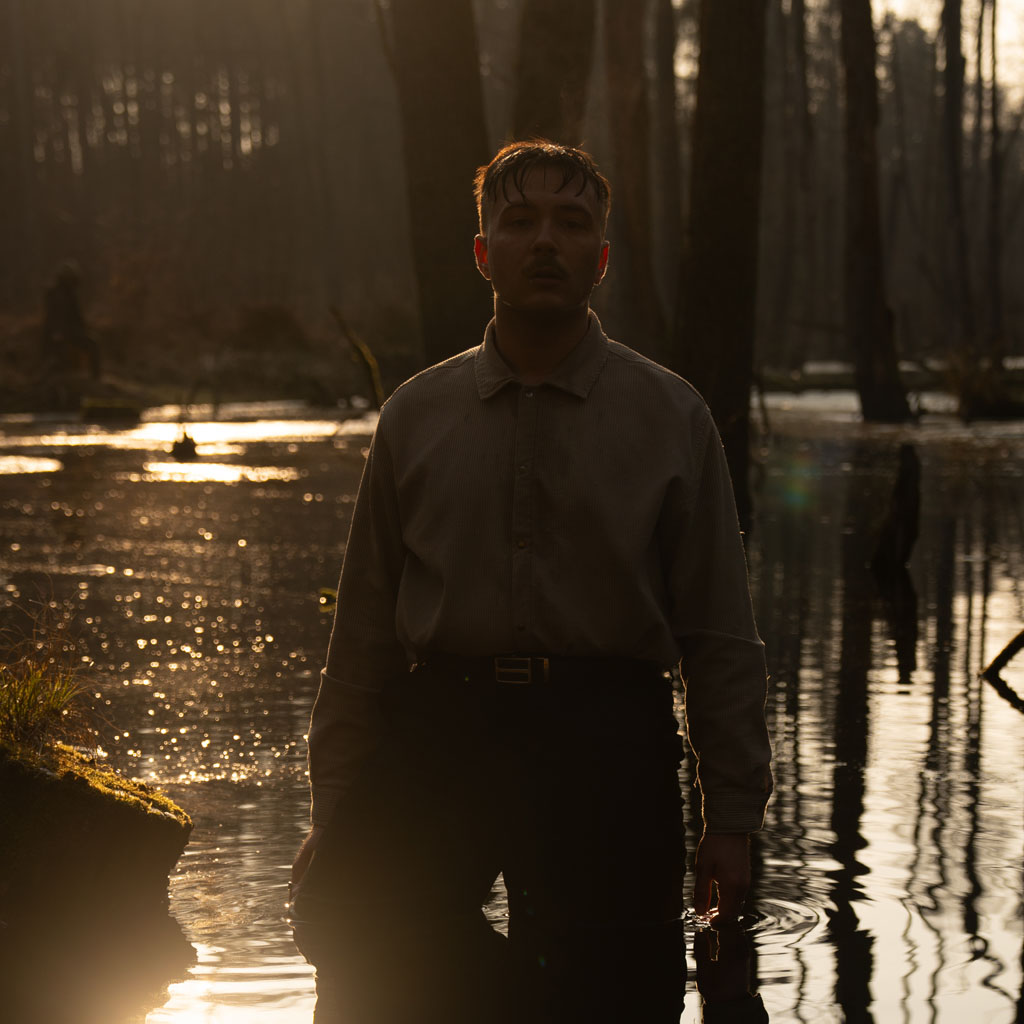
Dust of Apollon is Bruno Dienhardt’s solo project – and on “Chapters Left Unread” he sounds like someone who listens to himself think. This album is not a statement, not a calculated throw towards scene relevance. It is something much more intimate: an attempt to understand yourself while you are still in the middle of the process. Right from the first run-through, it becomes clear: no one is writing songs here, states of mind are being recorded. Fragments of thoughts, feelings that cannot be sorted. It is music that does not so much provide answers as ask questions – and that is precisely where its power unfolds. It acts like a space in which you can get lost without immediately needing an exit. We talk to Bruno.
The moment when everything tipped over
He realized early on that music could be more than just entertainment for him. “The first time I not only listened to music, but also asked myself what was actually happening, was with Skrillex,” he says. This fascination with sound as something intangible, something that cannot be grasped immediately, became the starting point. “I wanted to know what it was that I was hearing, what was behind it.” What follows is not a straightforward path. Rather a detour via loss of control. Gaming addiction, six hours a day, a life in a loop. The fact that a launchpad of all things – initially more of a dust collector than an instrument – became the entry point seems almost incidental. “I didn’t really decide to do it, I was more or less forced into it,” he says and laughs. The turning point lies precisely in this forced routine. At some point, ten minutes a week becomes a space that offers more than any game: meaning. “I realized that music is what really fulfils me.”
The cracks that create art
“Chapters Left Unread” thrives on ruptures. Of moments in which nothing seems stable anymore. And there are reasons for this. The death of his grandfather and his cat in the same summer – events that shook his perception of security. “That turned my world upside down a bit,” he says. Even more formative: dealing with emotions. Or rather: the lack of it. “I rarely saw men cry when I was young. To this day, it is sometimes very difficult for me to find access to my own emotions.” In addition, there is another experience that goes deeper than you might think: bullying. Not from strangers, but from those closest to me. “These were the people who threw these things at me.” Words that stick. That stick. And which at some point turn into self-images that you only work against years later. It is these cracks from which the album draws its intensity. You don’t hear completed processing, you are in the middle of a process that is still ongoing – and that is precisely why it is so close.
A diary without a plan
It is interesting that the concept of the album only becomes tangible late on. “I realized that I didn’t really know what my album was actually about,” he says looking back. The result is not a neatly constructed work, it is a cosmos that has grown organically. One that only fully reveals itself when you listen to it – and which has its strongest moments precisely when it doesn’t want to explain itself, but simply happens.
Between closeness and loss of control
Thematically, much revolves around a field of tension: closeness and fear. Control and the knowledge that it is an illusion. “I’m very afraid of losing people,” he says. A sentence that runs like an echo through the entire album. The attempt to hold on to things that cannot be held on to. This becomes particularly clear in the lyrics about relationships. Love does not appear here as an ideal, “Love is pain, love is hope. Love is security and love is fear.” This ambivalence runs through everything. Including the realization of losing oneself in the process. “In this case, unfortunately, it was an unconscious self-abandonment,” he says about a central line. Shortly afterwards: separation. It is these unfiltered moments that carry the album. No pathos, no exaggeration – just the honest admission that you don’t always know where you stand.
We will continue the interview soon. You can also find out more in our May/June issue.
Jan Schütz (Meersein)
Dust of Apollon – Tourdates:
April 30, 2026 DE-Cologne, Helios 37
May 01, 2026 DE-Stuttgart, Im Wizemann
May 02, 2026 DE-Munich, Backstage
May 03, 2026 DE-Saabrücken, Kleiner Klub/Garage
May 08, 2026 DE-Leipzig, Moritzbastei
May 09, 2026 DE-Berlin, Badehaus
May 13, 2026 DE-Wuppertal, Live Club Barmen May 13, 2026 DE-Berlin, Badehaus May 2026 DE-Wuppertal, Live Club Barmen
14. May 2026 DE-Frankfurt, Nachtleben
15. May 2026 DE-Hannover, Subkultur
16. May 2026 DE-Hamburg, Logo
Do you already have your tickets?
*The link recommendations marked with an asterisk are affiliate links/affiliate program links which you can click on freely. When a click and purchase is made, we receive a commission from the provider (we earn from qualified sales as an affiliate). Of course, the price does not change for you. In this way you can help to cover some of the costs of this website.
Watch the video for “Hall of Mirrors”:
Already subscribed to our newsletter?
You can subscribe to the print edition of Orkus! magazine here: