
That’s how it was with ROME
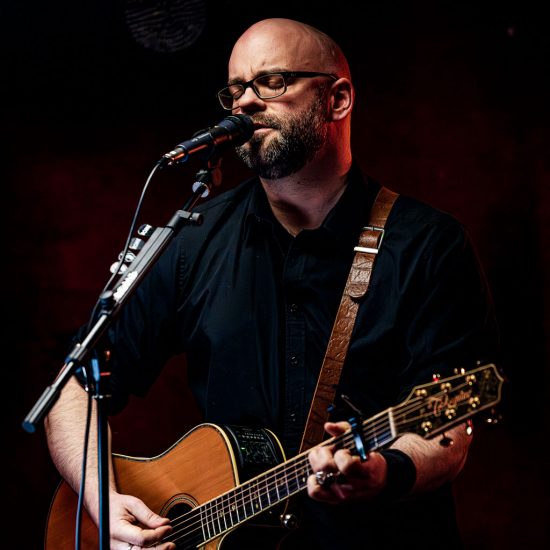
February 13, 2026, Lübeck, Cargo Ship
Rome – Twenty songs against the silence
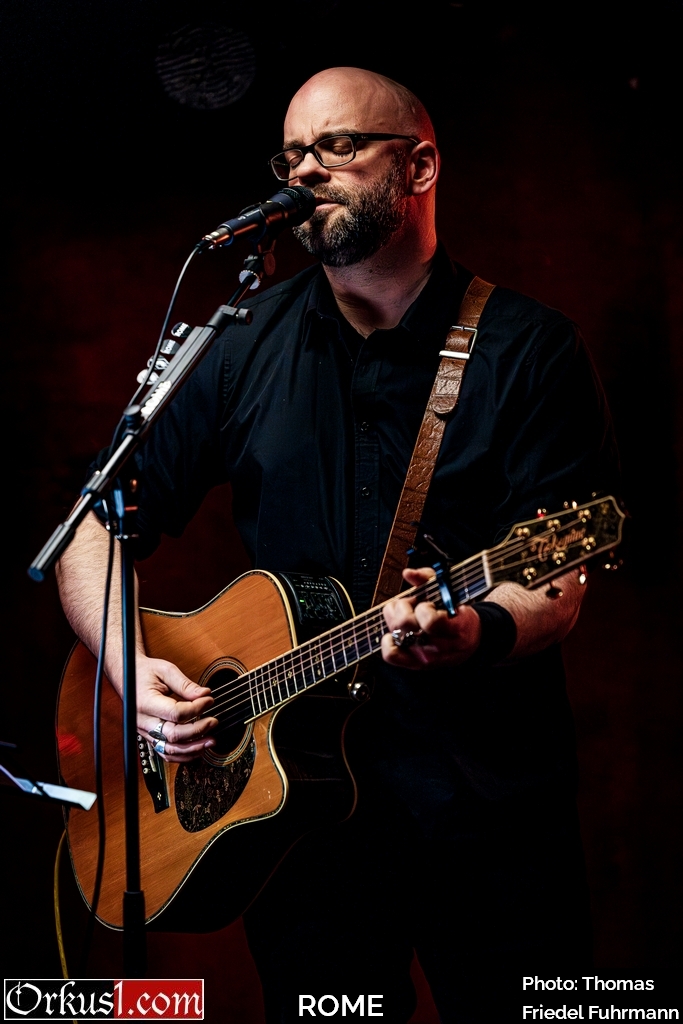
On this February night, Lübeck seems as if someone has turned the world down. Snow falls thickly over the harbor, settling on railings, deck planks and shoulders. Footsteps sound muffled, conversations become breath. The walk to the cargo ship doesn’t feel like a concert, but like a transition. From outside to inside. From noise to silence. From time to something that passes more slowly. ROME have been accompanying the darker side of European history and the present for over two decades. Not as a pose, but as an attitude. Jérôme Reuter’s songs tell of memory, loss, dignity, resistance – always politically alert, always poetically open, never comfortable. On this evening he stands alone. No band. No protection through volume. And suddenly it becomes clear how much closeness music can carry.
The beginning belongs to the new era
The first notes of “The Twine and the Twist” fall cautiously into the room, followed by “To the Great Work Only” and “Twilight Leaves”, as if the evening were first telling itself – three pieces that seem like quiet steps into unknown territory. Later, “The Lighthouse and the Catacombs”, “This Slaughter Behold” and “Remember to Dare” open up a quiet horizon between hope and heaviness, until “This Hour Her Vigil” leads everything into quiet vigilance and closes the first circle of the new album “The Tower”. With “Secret Harbour” from “The Hierophant”, the gaze seems to wander briefly out over dark waters. Afterwards, “Neue Erinnerung” and “Celine in Jerusalem” bring the audience back to reality – to ROME’svery own world of sound.
Between world and wound
“Todo Es Nada” carries a quiet heaviness, a tiredness that many are familiar with. After that, “In Brightest Black” and the new “Stars and Stripes” shine like fragile hope in the haze, before “Who Only Europe Know” and “Tomorrow We Live” touch on the past and the future in the same line. Later, “The Twain” and “Ostracism, Baby!” cut through the silence with unusual clarity, combining raw directness with poetic poignancy, while “Uropia O Morte” almost brings the room to a standstill and leads the evening into an almost sacred calm. “One Lion’s Roar” remains for the encore – not a loud conclusion, but a last, deep breath. Then silence. And nobody dares to break it too soon.
What remains when nothing plays anymore
When the evening ends, hardly anyone speaks immediately. Not out of reverence, but rather because words do not yet fit again. One man, one guitar, twenty songs – sometimes that’s all it takes to stop time. This evening shows the power of reduction, especially in the now, which often thrives on volume. Outside, the snow falls thicker than before. It muffles footsteps, swallows sounds, makes the night go on. You walk slowly across the deck, along the shore, back into a world that will be louder again. But something remains – not in the room, but under your skin. Perhaps that is the real strength of such evenings: They prove that reduction is not loss, but truth. And while snowflakes drift in the light of the lanterns, a thought stands still between them: Some songs don’t end. They just wait until you become quiet enough again.
Text & Photos: Thomas Friedel Fuhrmann
Setlist:
“The Twine and the Twist” – “To the Great Work Only” – “Twilight Leaves” – “The Lighthouse and the Catacombs” – “This Slaughter Behold” – “Remember to Dare” – “This Hour Her Vigil” – “Secret Harbour” – “New Memory” – “Celine in Jerusalem” – “Fatherland” – “Todo Es Nada” – “In Brightest Black” – “Stars and Stripes” – “Who Only Europe Know” – “Tomorrow We Live” – “The Twain” – “Ostracism, Baby!” – “Uropia O Morte” — “One Lion’s Roar”


Listen to ROME in our “Neo Folk Rules” playlist on Spotify:
Schon unseren Newsletter abonniert?
Hier kannst Du das gedruckte Orkus!-Magazin abonnieren:


