That’s how it was with SUBWAY TO SALLY
April 10, 2026, Hamburg, Markthalle
Acoustic scars, old ghosts and a finale for eternity
Subway to Sally stand for change without betrayal, for pressure with spirit, for songs that sound like smoke, iron, desire, anger and lost dreams. They have been making their mark on the black scene since the early nineties – sometimes as minstrels between market and myth, sometimes as edgy storytellers with a sharp eye. They tell stories that stick. And sometimes bite back. With “NACKT III – Lies & Legends”, a concept returns that has always been more than a mere reduction to acoustic instruments. It is a loss of control with an announcement. An evening in which nothing disappears behind amplifiers. No wall, no protection, no excuse. Just songs and stories. – This is precisely the appeal of this tour. Those who only know Subway to Sally as a thundering live force between bagpipes, riff edge and anthemic furor will not simply experience a “quieter” version here. These concerts take the armor off the songs – but not their teeth. What remains is not a well-behaved campfire romance, but an evening full of cracks, closeness and character.
Acoustic? Yes. Harmless? Not for a second
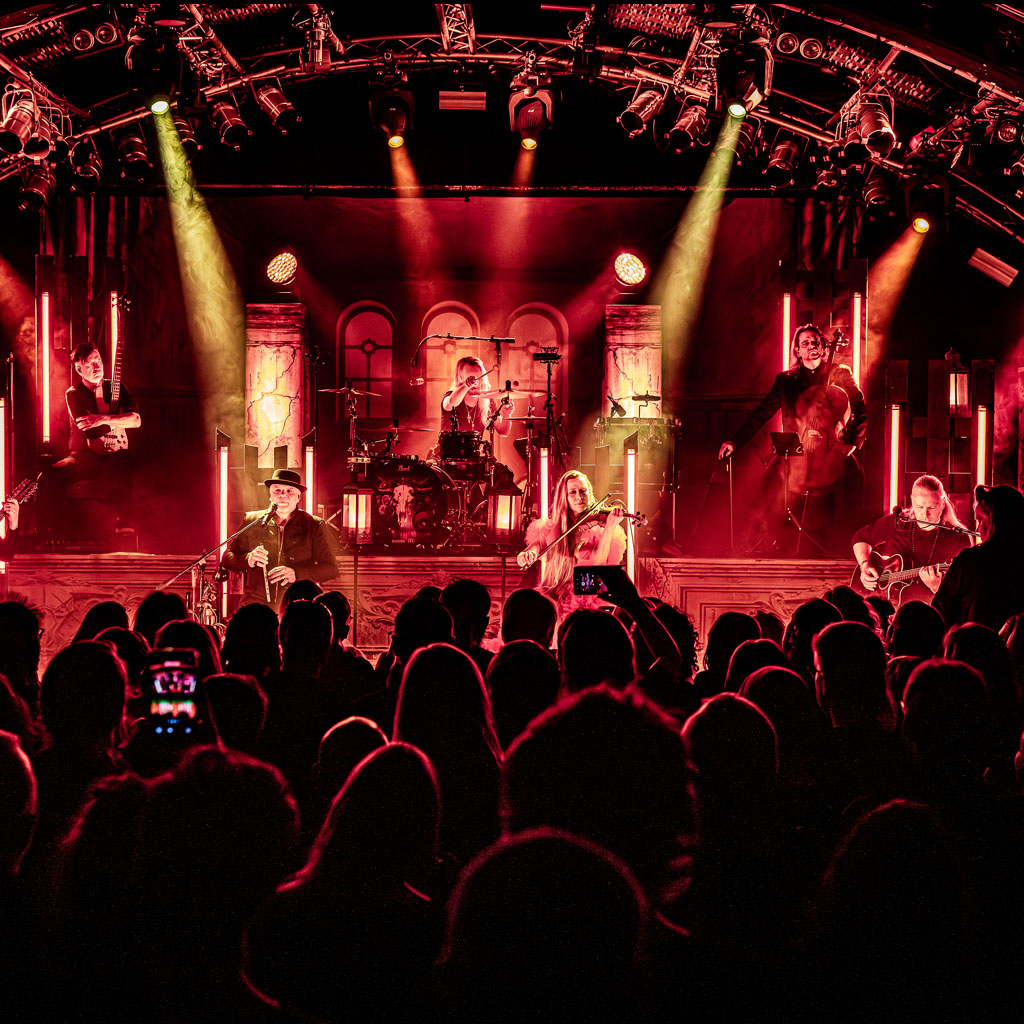
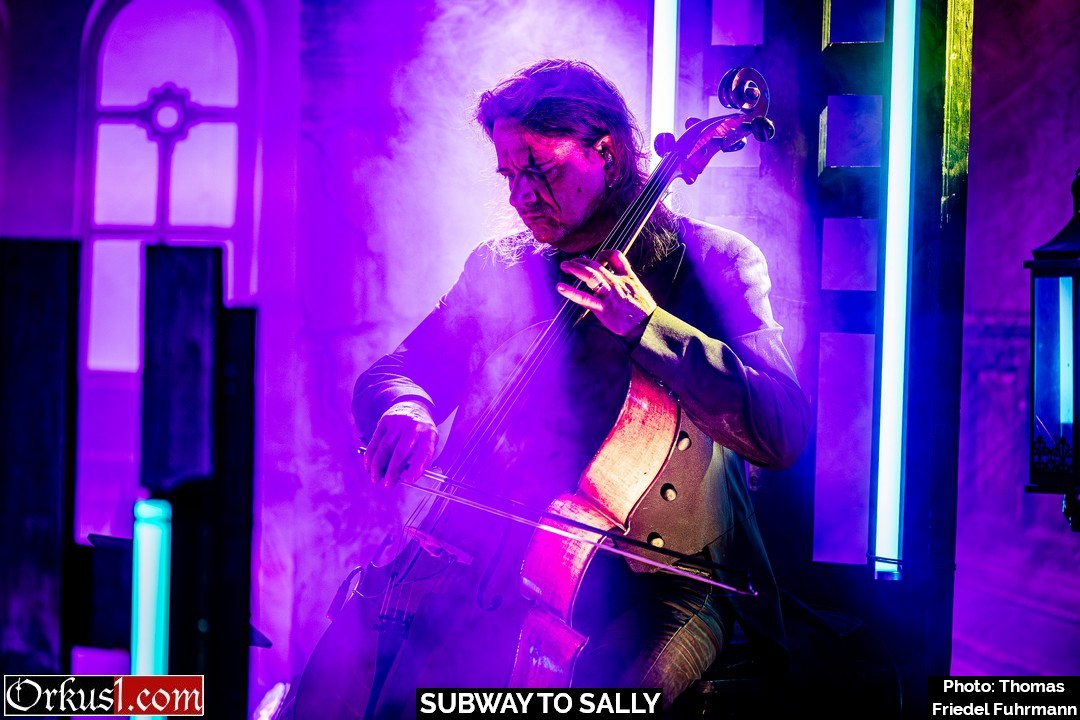
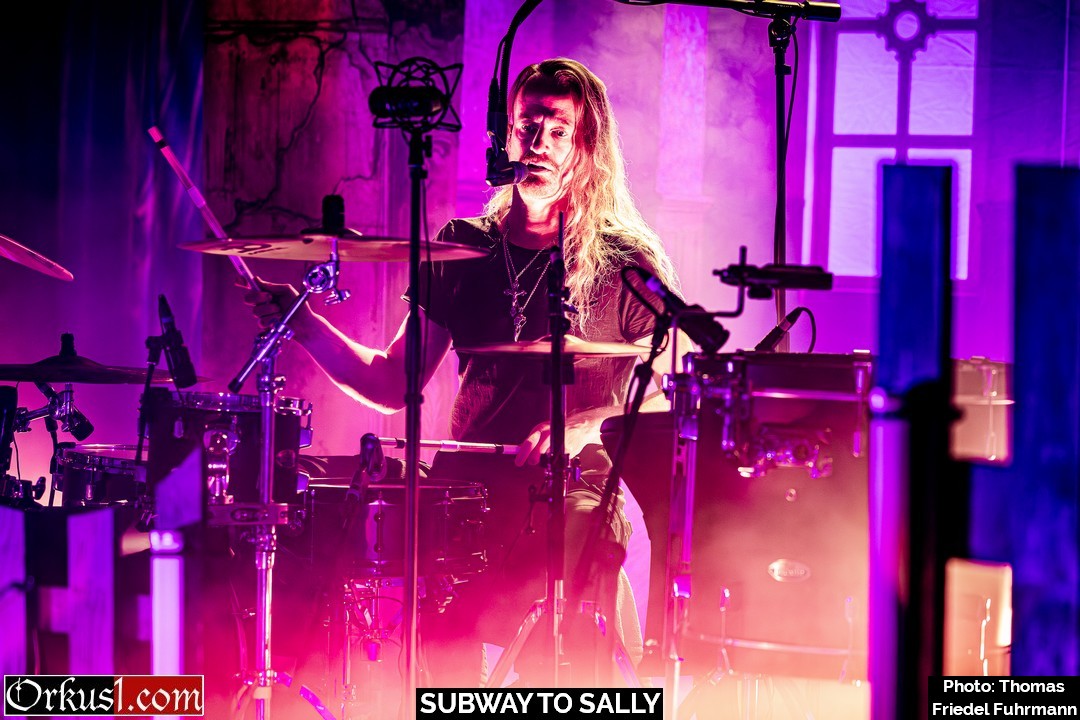
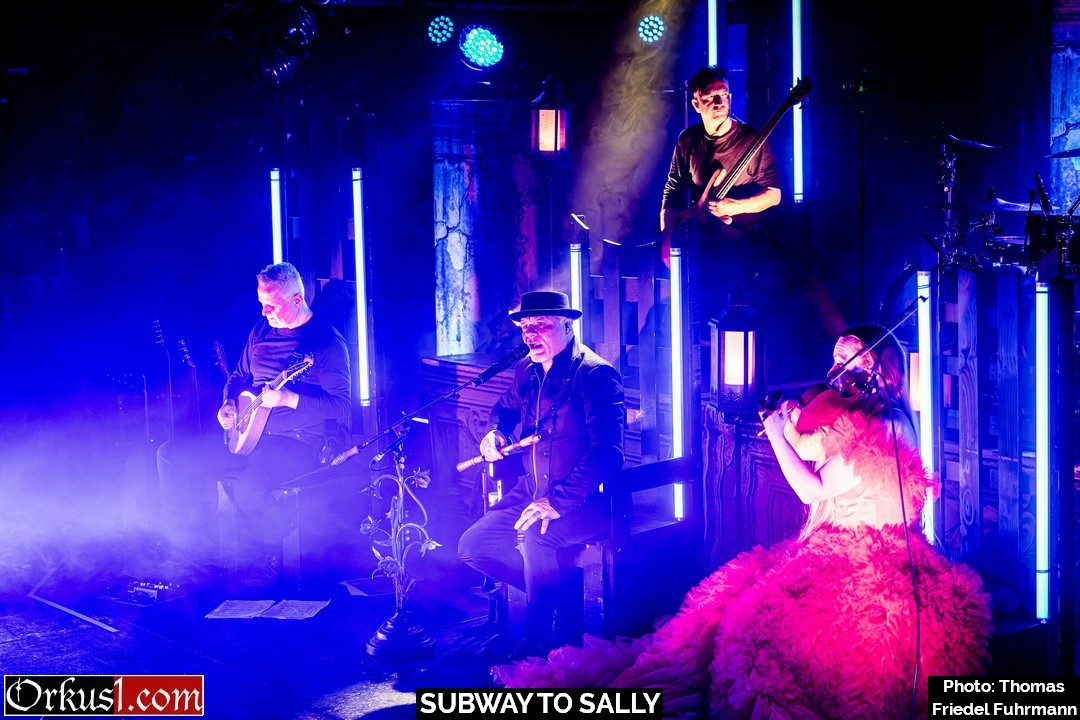
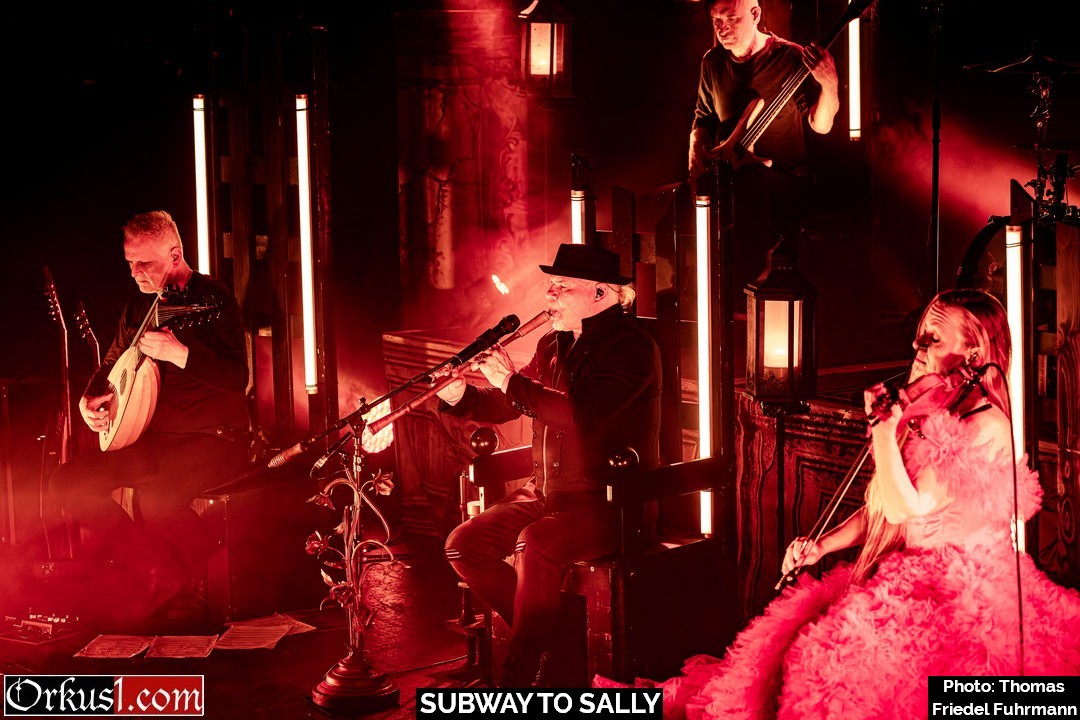
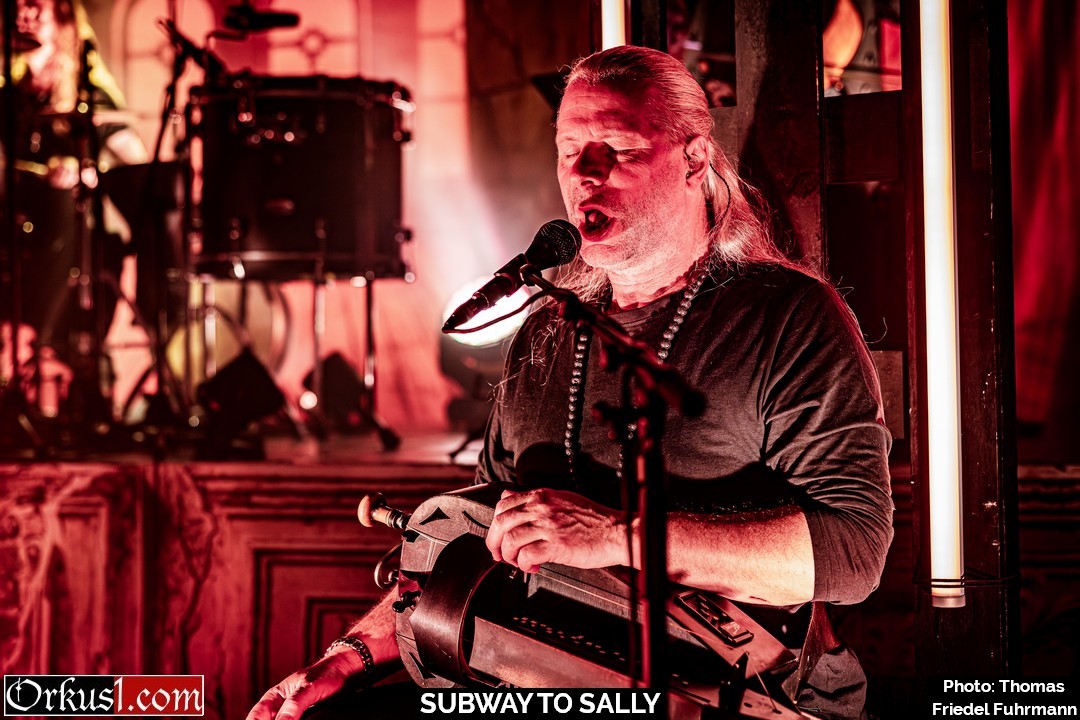
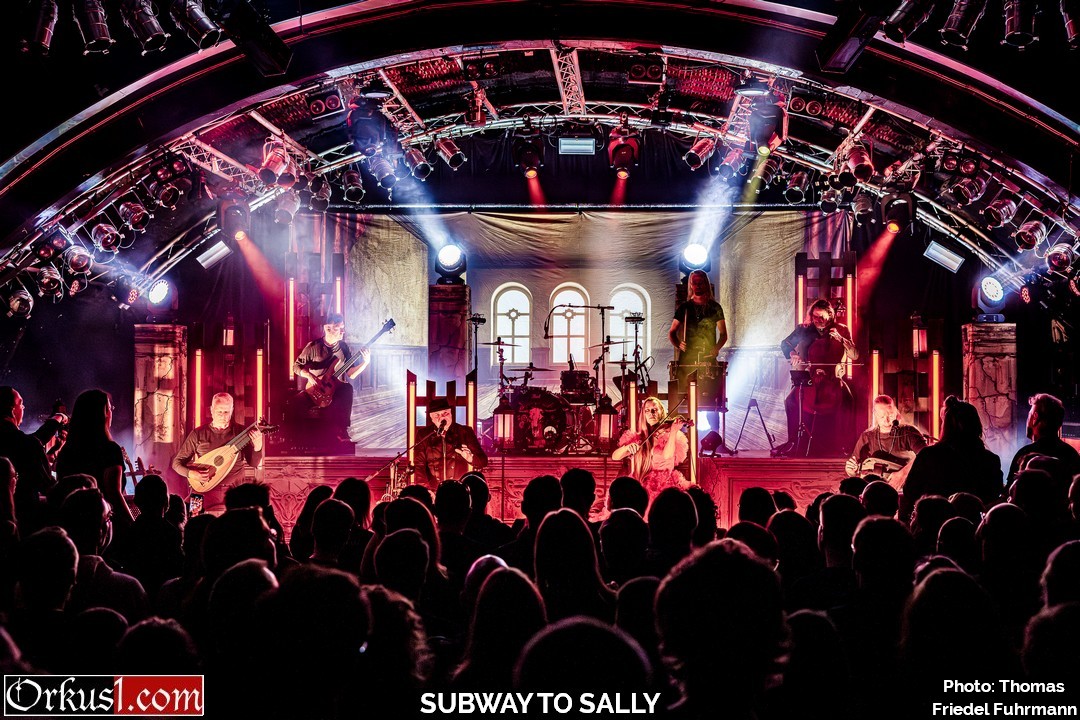
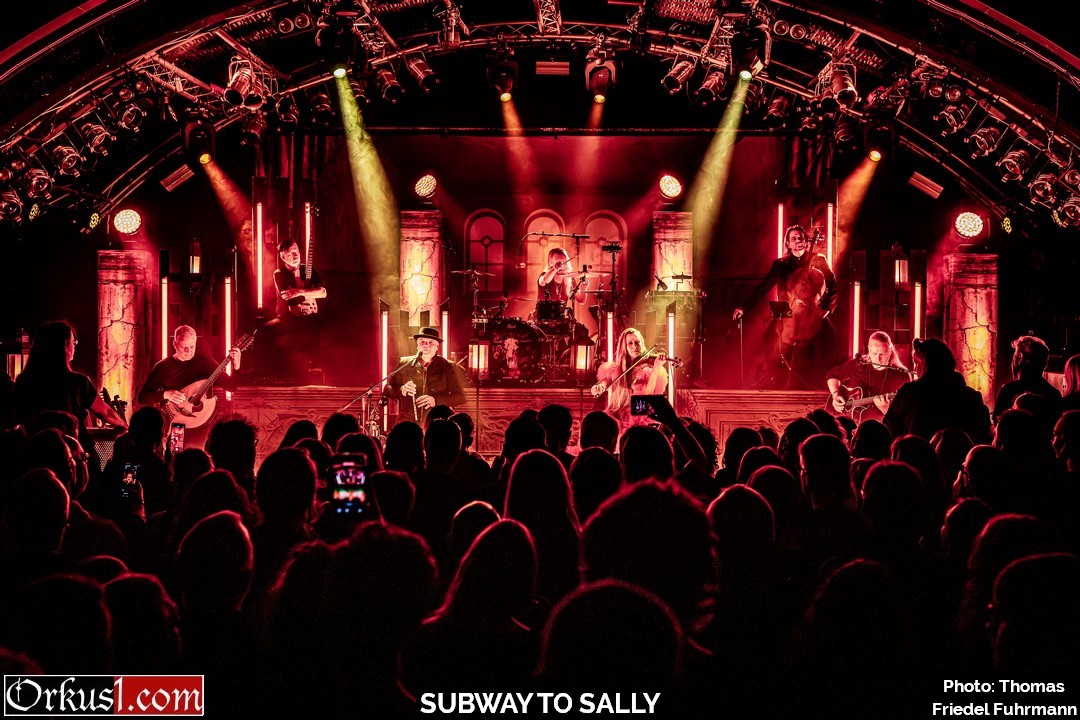
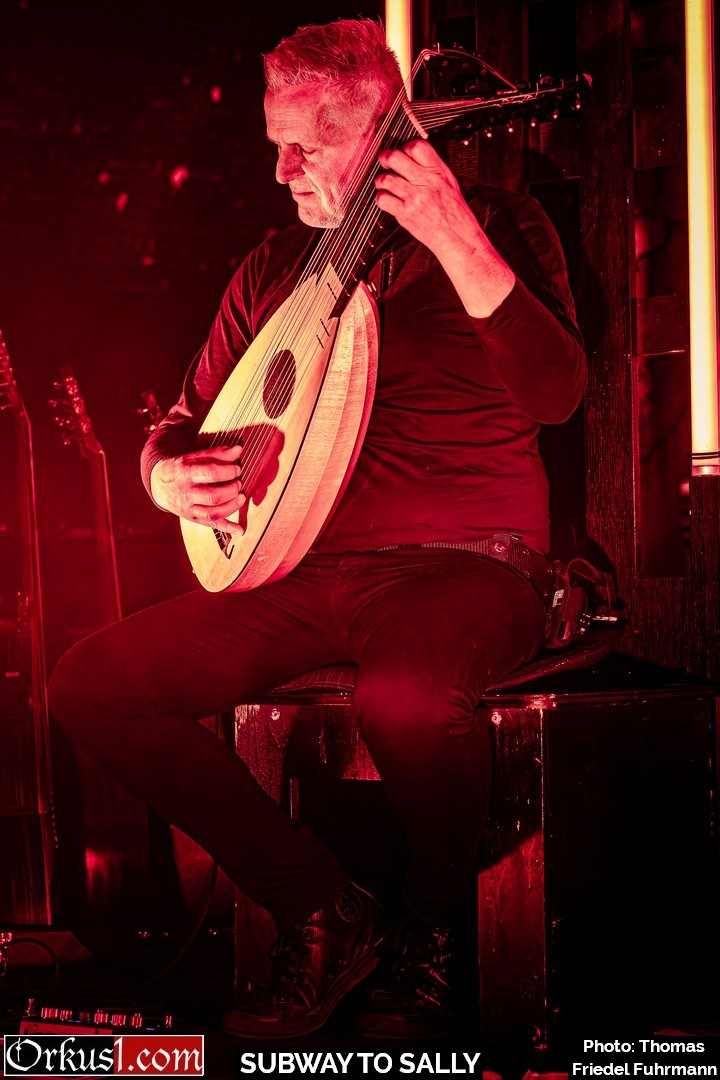
The market hall is sold out. Packed. Full of expectation. And yet what appears on stage seems almost decelerated at first. Tall chairs with extra-long backrests stand there – not furniture, more like minimalist throne fragments. Every seat is its own cosmos. No hectic running around, no overloaded set-up. Everything is focused on the people, the play, the presence.
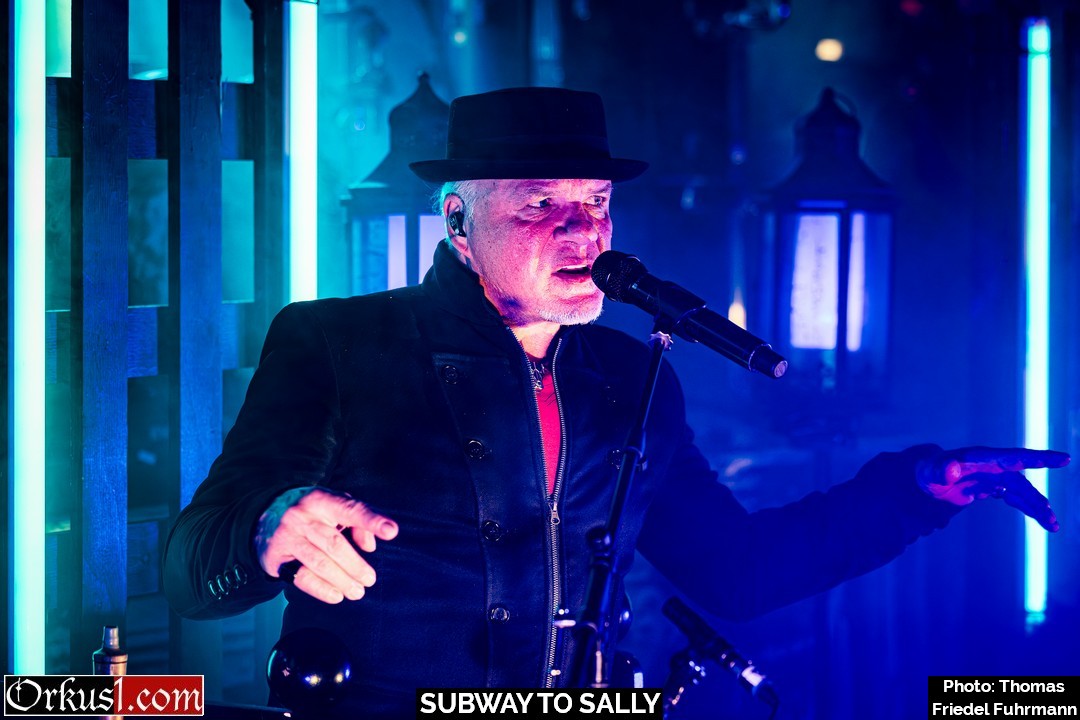
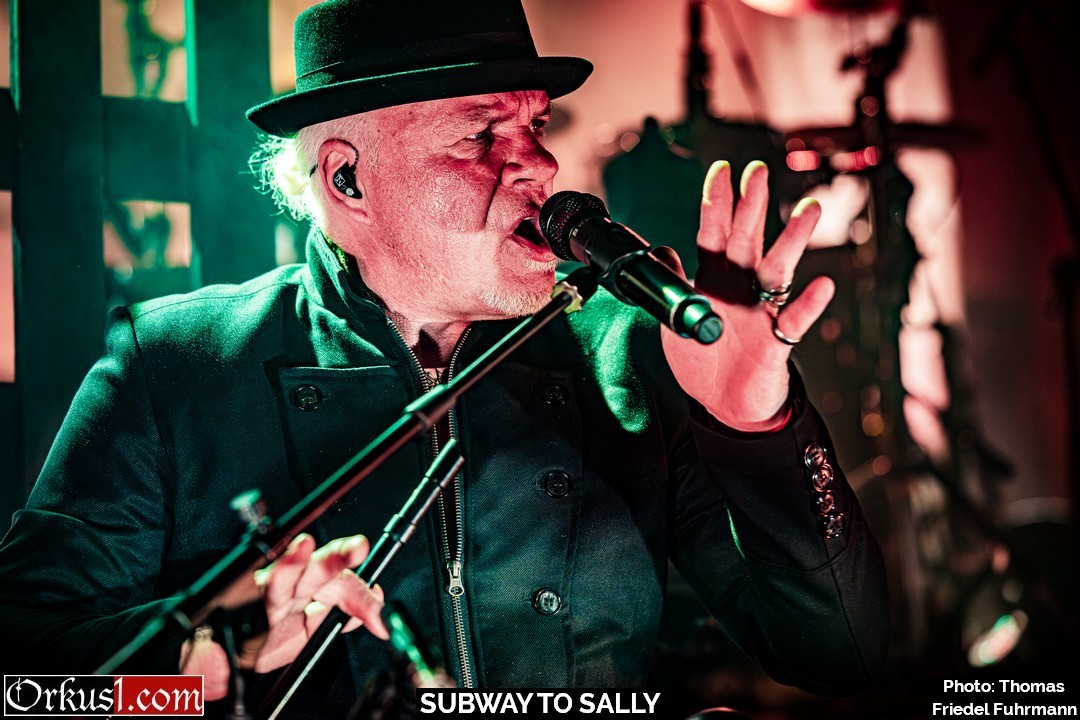
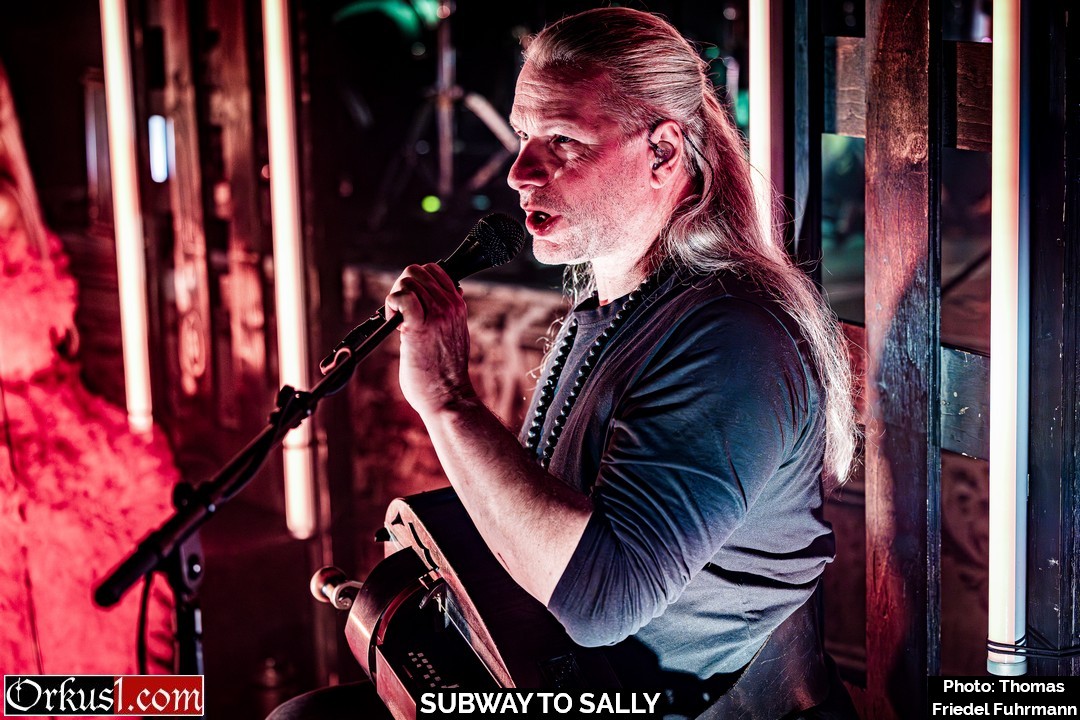
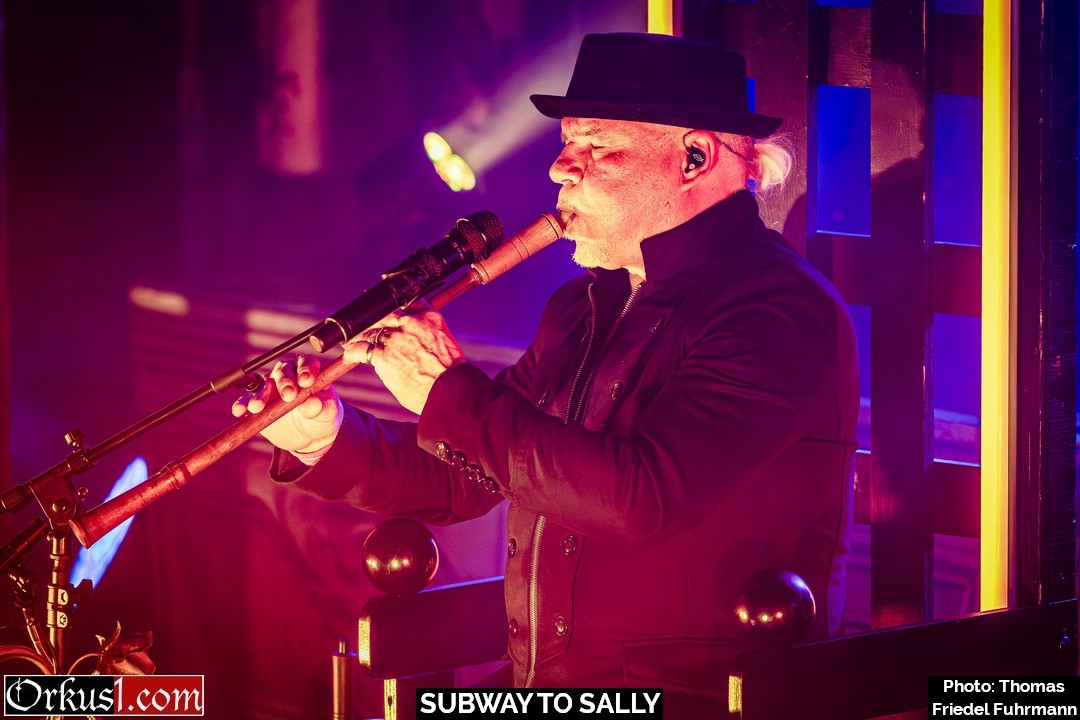
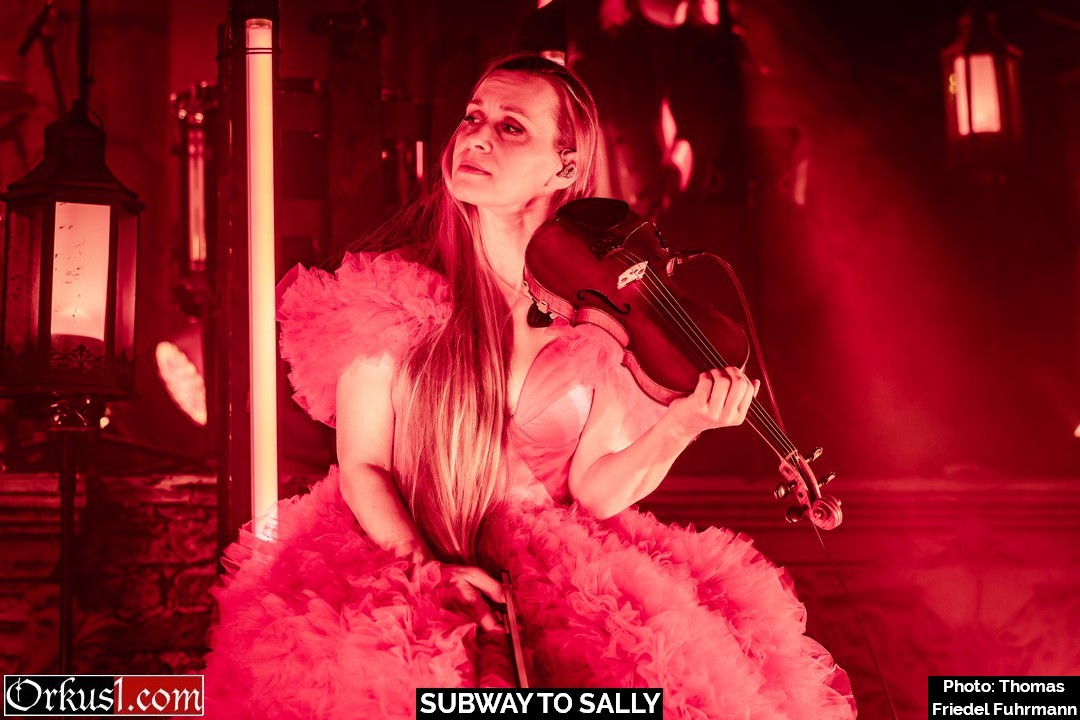
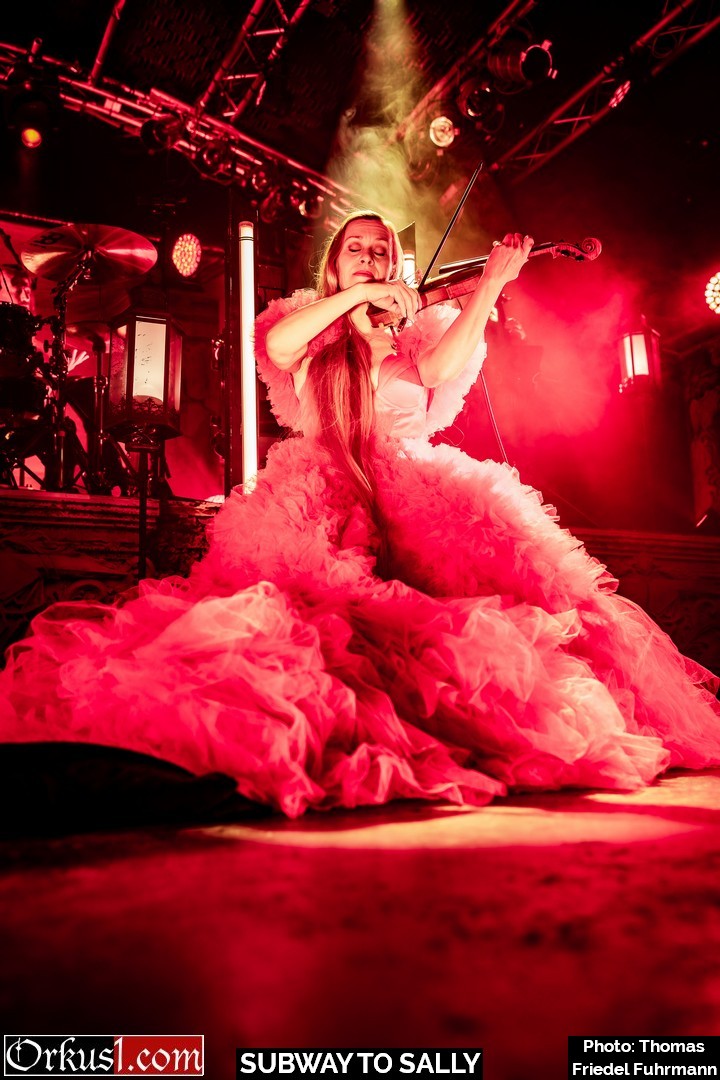
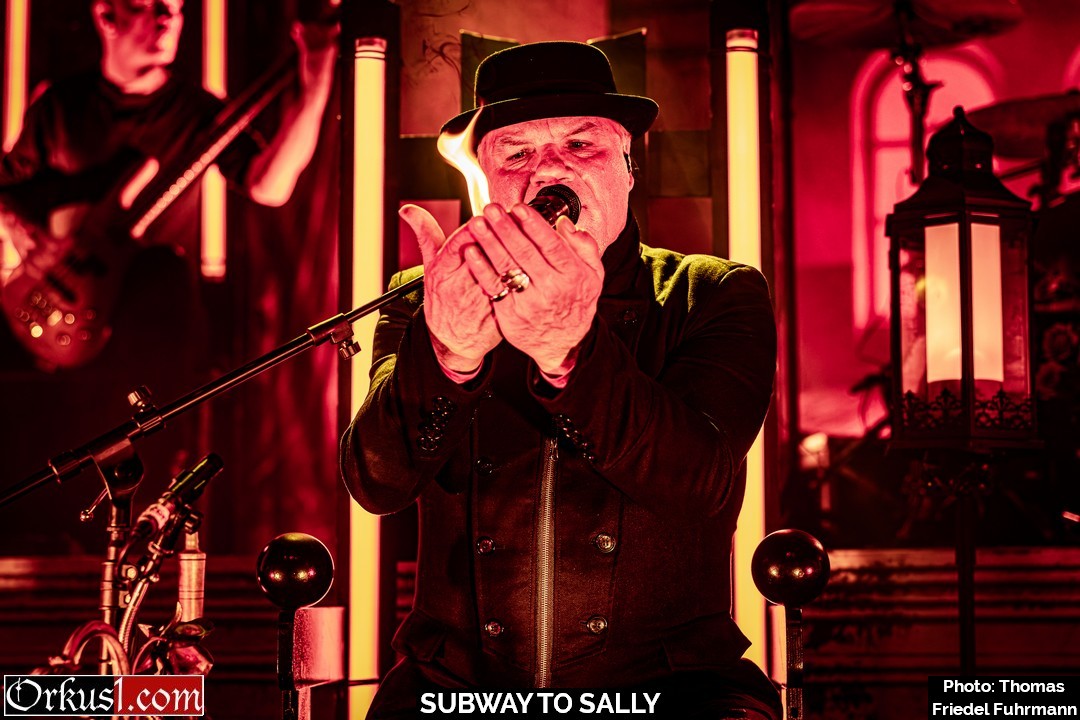
Right in the middle: Ally Storch, sitting on one of the chairs. Her dress is deep red, falling wide, flaring out at the bottom, almost like a broken-up flower made of fabric and tulle. It is alive, even when she barely moves. And the sound of her violin overlays it. Eric Fish, dressed entirely in black, forms the counterpart. He moves between the figures, picks up flutes and other wind instruments, lets go of the singing, picks it up again, shifts roles without it seeming like a change. More like breathing. A cycle.
This mixture of theater, concert and almost intimate storytelling session is no coincidence. The tour deliberately moves between living room and stage, between poetry and playfulness. Hamburg gets a full dose of this.
Songs that come closer
The opening track “Lacrimae ’74 / Feuerkind” immediately draws the hall together. No pressure from the outside, but a pull inwards. Eric Fish in the center, the voice rough, tangible – later the flute, which slips unobtrusively in between and gives the whole thing a second level. Afterwards, “Eisblumen” lays this cold, clear beauty over the hall, while Ally Storch plays with calm precision. Her red dress remains a visual antithesis – warm in image, cool in sound. Later, “Auf dem Hügel” provides brief relief before “Böses Erwachen” becomes denser again. Not louder, but tighter. You can feel how much these songs live from rhythm, voice and body language without an electric wall. This is followed by “Mistress of Fire”, carried by controlled embers. Then “Traum vom Tod II” draws the evening deeper – darker, slower, more tentative. With “Minne / Herz in der Rinde”, everything tips over into the intimate. The stage feels like it is shrinking, moving closer, becoming almost private. After that, “Mitgift” adds weight again, while Fish switches between voice and instrument and subtly shifts the flow. “The Riddle II” flickers like an echo of old stories before “Dress of Roses” sets one of those rare moments. Although nothing spectacular happens, everything happens. You realize how quiet a hall can become without losing any of its tension. “Was ihr wollt” resolves this with a slightly mocking undertone, before “Weit ist das Meer” offers a much-needed breath of fresh air before the break.
Second half: more edge, more movement
After the break, “Wenn Engel hassen” and “Leinen los” seem more animated, almost urgent. Eric Fish works more with the space, with glances, with gestures – while the instruments no longer carry, but drive. No revving up. Rather a consistent pushing forward. “Immortal” then casts a familiar shadow over the hall – grand, but never pathetic. Rather carried by this quiet knowledge that some songs just stay. Then it gets sharper. “Krähenfraß / Krähentanz” brings dirt back into the evening. “Henkersbraut” tightens the tension, almost uncomfortably close. This shows the strength of the concept: the songs lose nothing – they gain directness. “Post Mortem” seems almost too close, as if the song is no longer about distance, but about what happens between the notes. The dry, mocking harshness returns with “Falscher Heiland”, before “Die Ratten” lets the whole thing tip slightly into the poisonous – a short, biting rash. “Arche” builds up slowly, carried by atmosphere instead of mass. And then the medley from “Sag dem Teufel / Ohne Liebe / Tanz auf dem Vulkan” – a play with one’s own past that doesn’t seem nostalgic, but awake. Memory as movement, not as stagnation.
Ritual instead of encore
The last few meters belong to the songs, which have long been more than just setlist items. “Sieben” doesn’t come across as an anthem, but rather resembles a ritual. You can feel how the track takes over the room without overrunning it. “Veitstanz” then tears everything open. Not chaotic, but escalating in a controlled manner. A circling, a pulling, a pushing – until you are no longer standing outside, but in the middle of it. With “Maria” it becomes calmer and closer. A song that doesn’t want to work – and that’s exactly why it works. And then there is no doubt how this evening must end. “Julia and the robbers”. A play that defies explanation because it has long been part of our collective memory. Here we no longer observe – here we carry. By voices, by memories, by this strange mixture of intoxication and familiarity. This song always works – but in this setting it seems even greater. No pressure from the outside. Only energy from within.
Conclusion
Subway to Sally didn’t “reduce” anything in Hamburg, they didn’t play a “special” evening. They played an honest one. The stage like a minimalist throne room. Ally Storch as the visual and musical center in red. Eric Fish as a walking narrative instance between voice and instrument. And songs that can no longer hide. “NACKT III – Lies & Legends” shows a band that doesn’t hide behind its story, but takes it apart, reassembles it – and knows exactly when to take itself seriously and when to allow itself a grin.

Text & Photos: Thomas Friedel Fuhrmann
Setlist:
“Lacrimae ’74 / Fire Child” – “Ice Flowers” – “On the hill” – “Evil awakening” – “Mistress of Fire” – “Dream of Death II” – “Minne / Heart in the Bark” – “Dowry” – “The Riddle II” – “Dress of Roses” – “What You Want” – “Weit ist das Meer” – 20 minute break – – “Wenn Engel hassen” – “Cast off” – “Immortal” – “Krähenfrass/Krähentanz” – “Henkersbraut” – “Post Mortem” – “Falscher Heiland” – “Die Ratten” – “Arche” – “Sag dem Teufel / Ohne Liebe / Tanz auf dem Vulkan (Medley)” – “Seven” – “Veitstanz” — “Maria” – “Julia and the Robbers”
Listen to Subway to Sally in our “Medieval Rock” playlist on Spotify
Already subscribed to our newsletter?

Choose your favorite CD as a subscription bonus: