CHAPTER 7 in an Interview (1/2)
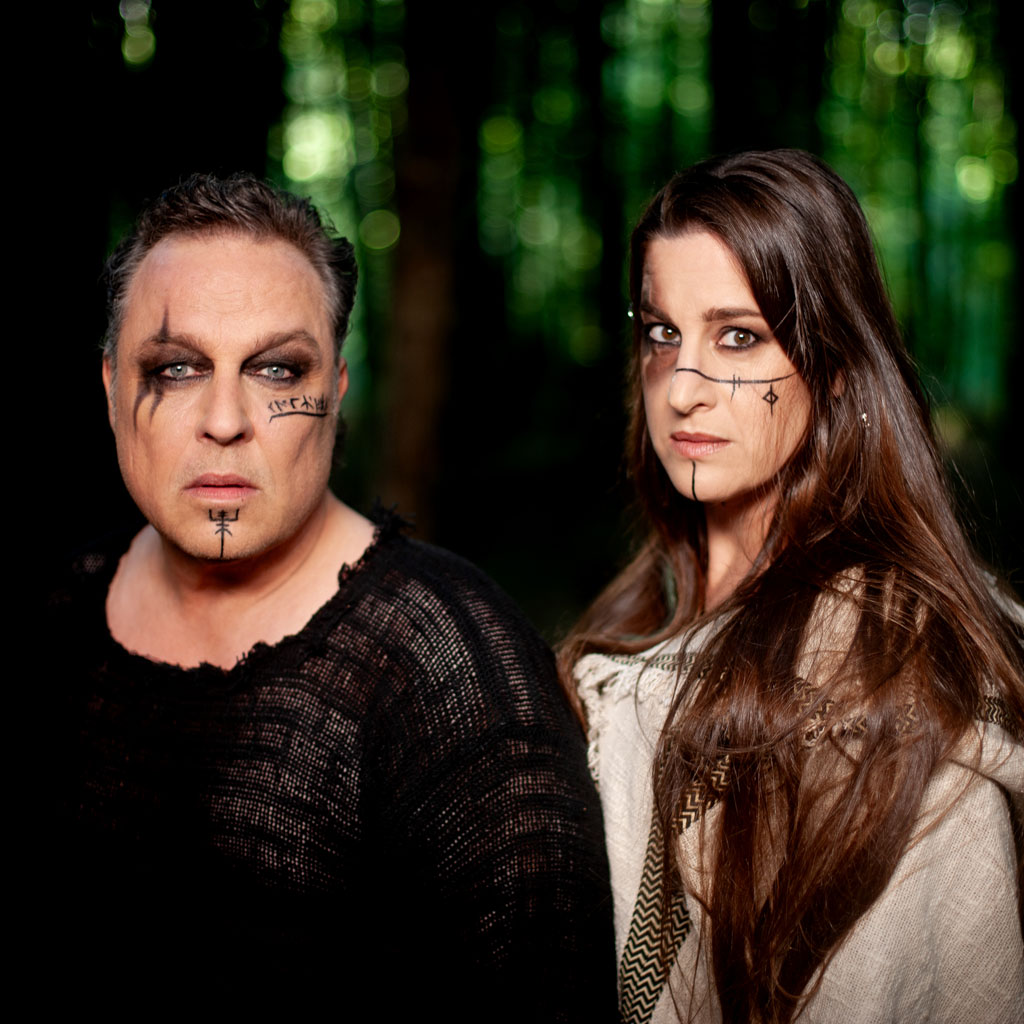
Amid intense emotions, dark soundscapes, and a language all its own, Chapter 7’s debut album “Tränenmeer” was born—a work that delves deep beneath the surface. In our two-part interview with David, we talk about the origins of Chapter 7, the special collaboration with Gracia, and the stories behind the songs.
Orkus: What’s the story behind the band’s name? Why “Chapter 7”?
David: With Chapter 7, we’re turning a whole new page! The number 7 has been my favorite number ever since my daughter Janine was born on March 7. We’re aware that “Chapter 7” refers to the section of the U.S. bankruptcy code governing personal bankruptcy, but that didn’t stop us from choosing that very name. (laughs)
Gracia: The number 7 also holds special symbolic and spiritual significance in many cultures and religions.
O: On the one hand, it’s natural for a couple to share common interests, and given your musical talents, it’s no surprise that this kind of collaboration works so well. On the other hand, I imagine the work is also very intense, and that might not necessarily be a benefit for relationships. How do you handle that?
Gracia: To be completely honest, it’s always worked out pretty well for us, since music and mutual support have always been the foundation of our life together. Sure, there are times when the overall workload is exorbitantly high—and with it, our stress levels—that things can get a little tense. But we don’t see that as a drawback for our relationship. Friction in stressful situations is common in many relationships. However, we’re on the same page about almost everything and know exactly where to step in to keep everything running smoothly, especially during those times. After all, we always know exactly what the other person is talking about and where our strengths—and, of course, our weaknesses—lie.
O: The first single from the album *Tränenmeer* is “Salz.” What led to this choice, and how did this song come about?
David: I’d already written the song a few months before the lyrics. At first, Chapter 7 was planned as an English-language project. A few days before I wrote “Salz,” Gracia and I drank a bottle of red wine—maybe even two or three. That evening, I shared the basic idea behind the lyrics with her. “Salz” is really nothing more than another way of describing sweat! It’s the symbiosis of a heavy perfume and a distinctive body odor that triggers a certain mental movie and haunts you from then on! The day before I finally wrote the text, it occurred to me to carry out the entire project in German, so I woke Gracia up shortly before 2:00 a.m. Half-asleep, she didn’t even realize at first what I wanted from her, but once she and her brain were finally awake, I explained to her that the standards we both hold for the lyrics would ultimately turn out to be much rawer, more emotional, and also more distinctive if we wrote them in our native language. Language is a crucial factor, and I believe it was precisely at that moment that we made a groundbreaking decision—one that explains exactly why Chapter 7 is now what it is!
O: There was already an interesting video about this. What was it like filming it, and how long did it take to paint the runes?
David: “Salz” was, after all, the initial spark for everything that was to come. So, naturally, it took a little longer, since it was clear to both of us that what we’re doing now will likely be a part of our lives for quite some time. Consequently, the whole thing with the runes also took a little longer than it does today.
O: To what extent do you think the use of AI is legitimate today? Both as a visual aid and from a producer’s perspective?
David: The world is changing every day. Since our content is very text-heavy, AI is actually very helpful for storytelling! Filming all of this for real at this level of quality would simply be unaffordable. Still, our videos are anything but easy to produce. Hundreds of hours of work go into them, since the visual style ultimately has to match our performance. Our music and lyrics, on the other hand, were created the good old-fashioned way.
Gracia: That certainly always depends on who’s using it, for what purpose, and exactly what’s being done with it. As a visual aid for, say, a music video, we think it’s absolutely fine—as you can see—and, in our case, almost indispensable. If you want to create certain surreal worlds or visually depict a story where it might not necessarily be ethically justifiable to put real people in front of the camera. Our song “Sheera,” for example, is about child abuse. We would never have had a real child act out that role, even though none of the images are even remotely explicit.
O: How did you feel while singing “Sheera”?
Gracia: Just reading the lyrics for the first time gave me goosebumps, and it was the same during the recording sessions. Every time I hear the finished song, I’m transported right back to that moment. It makes you want to fight and rise up against these cowardly beasts who have already dragged so many children’s souls into misery. It’s an extremely important issue—one where you can’t be loud enough—so that more people will take a closer look and help.
David: I was already struggling with this while writing those lines. It brings out my worst fears!
Maria Vain
We will continue our interview shortly.
Check out the interview about “Sheera”:
Already subscribed to our newsletter?

Choose your favorite CD as a subscription bonus: