
Interview with KÁRYYN (1/2)
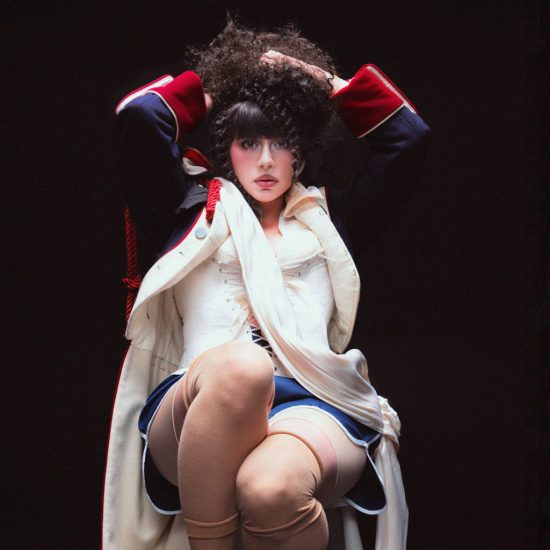
Los Angeles-based artist KÁRYYN, who has Syrian-Armenian roots, began her solo project in 2017. Read the first part of our interview here:
When physics becomes tangible
There are albums that tell stories – and those that create states. “Physics Universal Love Language (Pull)” by KÁRYYN clearly belongs to the second category. It is not a classic pop statement, it is an attempt to understand emotions as a physical system. “It was never separate for me,” she says, “but it crystallized in two moments – when I saw ‘What the Bleep Do We Know?” and later, when I was intensively involved with space physics and black holes.” At the same time, she was studying Buddhism and mindfulness. “I realized that all these systems describe the same reality.” This realization forms the foundation of the album: feelings are not opponents of physics – they are an expression of the same forces.
PULL: The power behind everything
The unwieldy title says it all. KÁRYYN thinks in systems, in relationships between forces. “What we experience or love is determined by the same forces as in physics: attraction, tension, alignment,” she explains. “PULL is this force – like gravity. Something inside us that moves, directs, attracts or repels us.” This idea runs through the entire album. Sound becomes a metaphor, but also a tool. Strings, modular synthesizers and beats are not decorative, they are functional – like fields that overlap.
The break as a beginning
The fact that the album begins with “Collapse Phase” is no coincidence. It is the gateway. “The moment of collapse is always also a moment of birth,” says KÁRYYN. “Everything opens up right there.” The song itself stems from a profound personal process. “In 2011, I realized that I needed to rewrite my inner patterns. That was the beginning of my own ‘collapse phase’.” It is not about passive suffering, but about active transformation. The lyrics also reflect this ambivalence: “It’s not resignation or liberation – it’s both,” she says. “Deconstruction and new construction at the same time.”
Jan Schütz (Meersein)
The interview will be continued here soon. We will also be talking to the artist in our May/June issue.

Order the May/June issue:
Listen to KÁRYYN in our “Current Issue” playlist on Spotify:
Already subscribed to our newsletter?
You can subscribe to the print edition of Orkus! magazine here:


