Interview with DAYS OF SORROW (1/2)
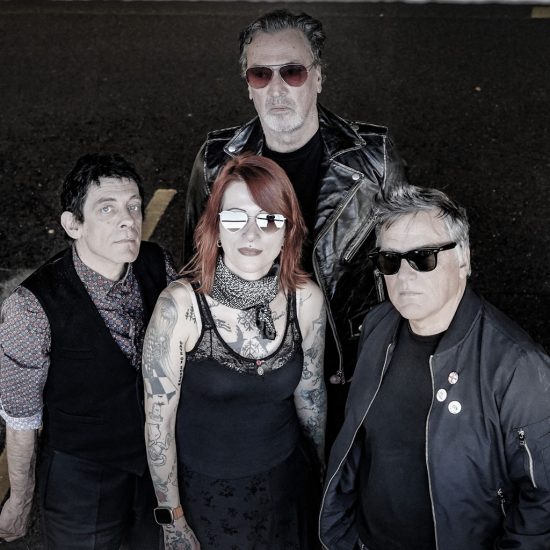
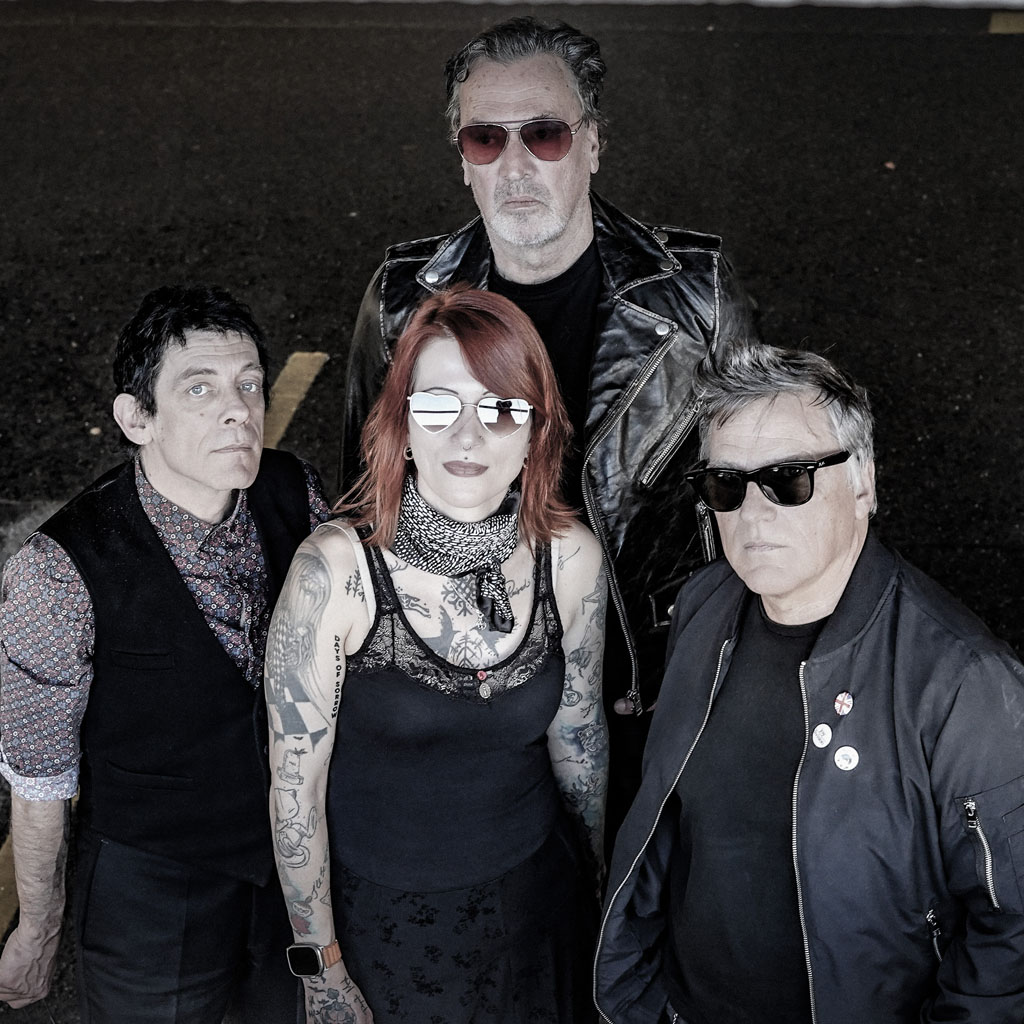
Days of Sorrow were founded in 1981, disbanded at the end of the decade and reformed a few years ago. Find out how this came about and more about “Raptures” – already the second album of their “new era”, as they describe it themselves – in our two-part interview.
Orkus: Let’s start at the beginning. You moved from England to Dortmund “back then”. How did this come about?
William Lennox: I had no influence on that. My parents traveled a lot with me. In the end, they decided to stay in Germany so that I could do my schooling here. It was a very pragmatic and sober decision.
O: Where and how did the birth of Days of Sorrow come about?
WL: Yes, that’s where school comes into play again. There were a few people there who, like me, were fascinated by what was going on in the punk and wave music scene. Without further ado, we got ourselves a room where we could try things out. More or less spartanly equipped, we then began to find our way.
O: How did it come about that the band took a long break and has now been active again for a few years?
WL: After the break-up, we each went our own way. (Studies, training, job, whatever happens …) Also geographically, we scattered in all directions. However, I continued to work with music and after detours via London (with bands) and Berlin (my own music production) I finally arrived back in Dortmund, met up with André Schreiber – the bassist – for a beer and it clicked just like back then. Our guitarist at the time was unfortunately quite busy with work, so I asked my old friend Frank Junge if he would like to take over the keyboards. The first new songs were then recorded in my small studio. After André left the band for personal reasons, Jojo Brandt (guitar) and Kati von Schlotterstein (keyboards) joined us.
O: Of course, we mainly want to talk about “Raptures”. You call it “Our second album of the new era about our journey, music and feelings. A personal adventure.” How does this era feel for you personally?
WL: First and foremost, it was exciting. We picked up where we left off at the end of the eighties, we didn’t want to change much, we wanted to continue with the sound. But “Raptures” has also become a somewhat more mature album. In the earlier years we asked more questions, were curious and curious about what was happening, see “Wild World…whatever happens”). Today we can reflect more.
O: Honest music often has something to do with attitude towards life and zeitgeist. Do you see any similarities between the eighties and today in terms of attitude towards life and zeitgeist (also in the world of post-punk/dark wave)?
WL: I think it’s great that there are still so many people who want to and can express themselves through music. Yes, of course, everything has become much more diverse and mixed, but that doesn’t have to be a bad thing. On the contrary, especially in music, many styles are merging under the umbrella term “dark”. That didn’t exist in the early days. The division into different musical styles and zeitgeists was more pronounced. And yet, as already mentioned, we didn’t want to reinvent ourselves, we just wanted to pick up where we left off.
O: What three things or experiences from the eighties do you look back on fondly?
WL: Well, we were young and euphoric in the eighties and of course the good things tend to stick. I have fond memories of the first big gig at Zeche Bochum. It was very exciting for us because our idols were on stage there at the time. Musically, I thought it was crazy that you could now work analog and digital, TR 808 drum computer, Juno 60, Poly Six and DX7, that was our tool and still is, I just love these sounds. And, in those years, our connection to Spain came about, with interviews at radio stations in Barcelona, etc.
O: By contrast, what are the advantages of the present day?
WL: From a musician’s point of view, it is much easier to produce demos and ultimately albums without having to have a label and book a studio. Being internationally visible to a certain target group is also possible today without being dependent on fanzines and magazines.
Claudia Zinn-Zinnenburg
Line-up:
William Lennox – vocals, programming
Katharina von Schlotterstein – keyboards, background vocals
Jojo Brandt – guitars
Frank Junge – keyboards, synthesizer
Listen to “Raptures” on Spotify:
Already subscribed to our newsletter?

Choose your favorite CD as a subscription bonus: