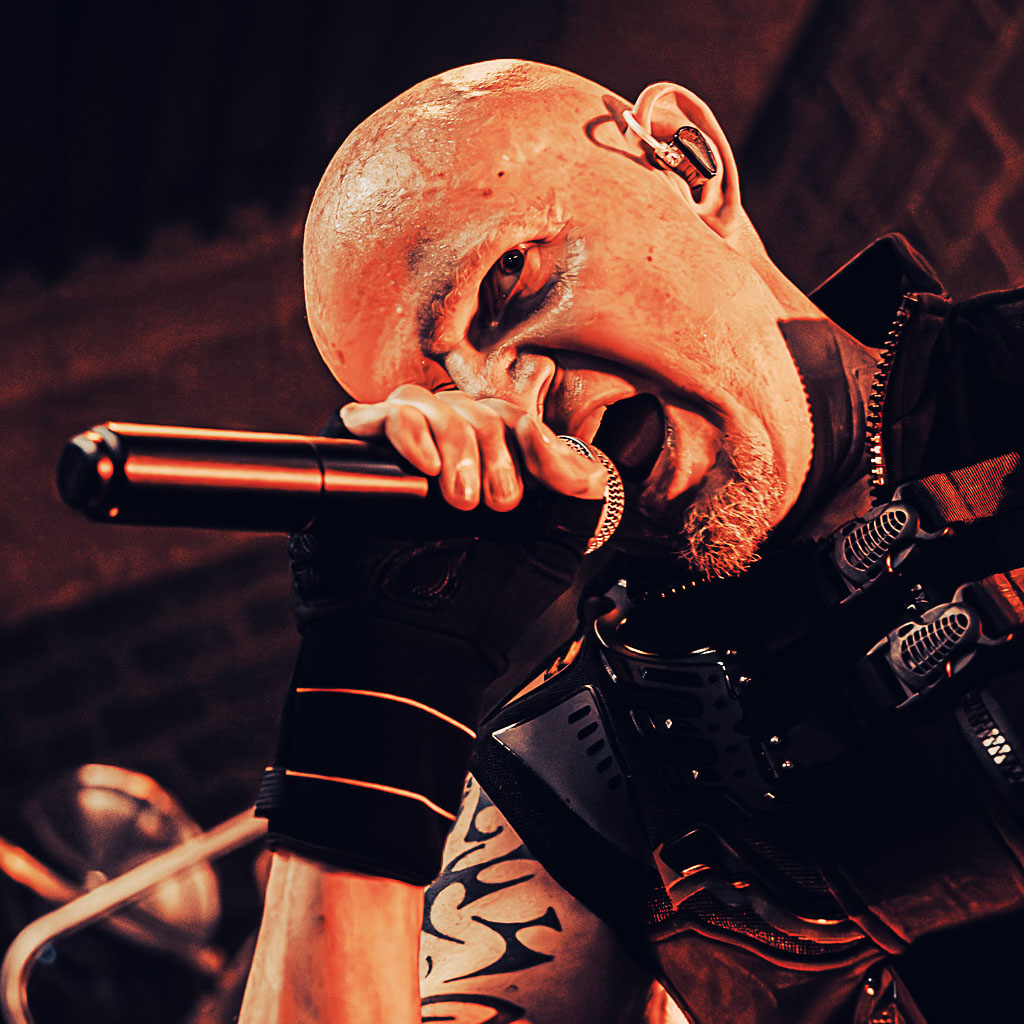
Interview with KRIEG-B (2/2)
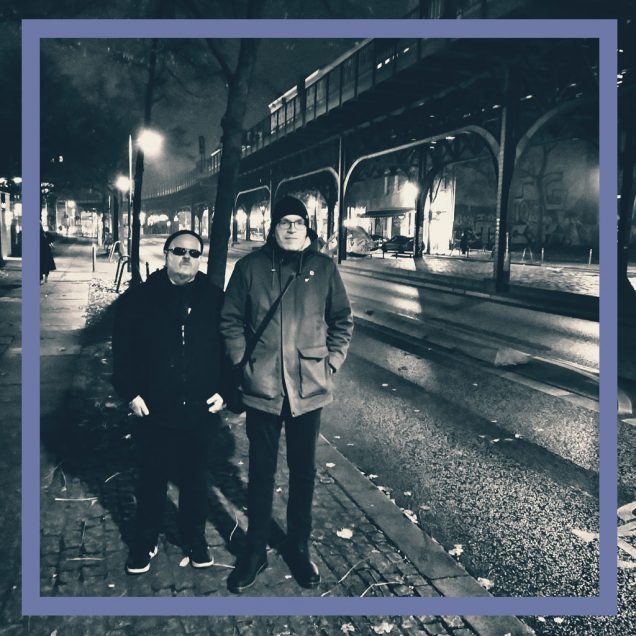
We talk to Krieg-B, which consists of Frenchman Dominique Lallement and Belgian Benoît Buyse, about their latest album “War Drums’ Resonance”. We explore the beginnings of the project, their influences, what the name is all about and also look to the future. If you missed the first part, you can read it here .
Orkus: Your debut album is entitled “War Drums’ Resonance”. How did you come up with it and why does it represent the album so well?
Dominique Lallement: The title “War Drums’ Resonance” derives directly from the analogy between musical percussion and the sounds of war. The idea of the “war drum” recalls both the rhythm of a track and the repetitive, relentless sound of cannons or impacts in the context of a conflict. In war there is a kind of acoustic chaos, but sometimes also a very mechanical, almost rhythmic structure. We were interested in this duality: a global noise that can sometimes become structure, pulse and almost music. The word “resonance” expands on this idea. It’s not just about the initial impact, but about what continues to resonate afterwards – the echoes, the traces, the after-effects in both sound and emotion. The album builds on this permanent tension between impact and pause for breath. Very direct, rhythmically driven moments, almost like a relentless hammering, alternate with more atmospheric, melodic passages, like interludes in this soundscape.
Ultimately, the title sums up this idea: music that moves between organized chaos, rhythmic machinery and a more human or introspective resonance.
O: What fascinates you about war?
DL: War does not fascinate us. On the contrary, it worries us, makes us sad and frightens us. It is not something we want to glorify or aestheticize in any way. But as in many historical contexts, there is this image of the drum – the rhythm that is set before the soldiers to encourage them and maintain a sense of togetherness in the face of chaos. It is above all this rhythmic and symbolic dimension that interests us: the connection between sound, pulse and human tension in extreme situations. At Krieg-B we are not talking about war itself, but about what it can evoke in terms of intensity, rhythm and raw energy – always with a certain distance and without any form of glorification. More generally, there is also a certain anxiety about the current state of the world. We come from a generation shaped by the end of the Cold War, with the idea of a fragile equilibrium, and today we feel that very real global tensions are re-emerging. This inevitably feeds into a form of reflection and sensitivity that is reflected in our creative work.
O: Let’s talk about the music! The album starts energetically with “Special Operation”. Is there a background story to this?
DL: “Special Operation” refers to a term that has unfortunately become part of current news and media language. It’s not a political statement on our part, but rather a way of working with elements of reality as they exist and resonate in the present. We also use fragments of public speeches as raw material in the track. The idea is not to comment on them, but to transform them into sonic elements, just as you would use sounds or machine samples. The track opens the album with this immediate tension between reality, language and rhythm. It is a very direct entry into the world of Krieg-B, in which the sound also picks up fragments of the outside world.
O: “Napalm Girl” also stands out in particular. How did this track come about?
DL: “Napalm Girl” fits into the overall concept of the album: dealing with conflicts, both past and present, and what they leave behind. The Vietnam War is of course part of it, and this particular image has become a very strong symbol of the inhumanity of war. It’s not meant as a provocation on our part, but as a deeply moving historical reality. Musically, the track is very direct, almost punk-like in its energy. It is fast, frontal, without detours, with a focus on immediate impact rather than narrative. Beyond the historical aspect, it also touches us in a very personal way as parents. Certain images take on an even stronger dimension when viewed from this perspective. This only reinforces the need to express this reality in a raw, unfiltered way. The idea was not to tell a story, but to convey tension, urgency and a form of emotional shock through sound.
O: The album was released in 2024. Are there any plans for a follow-up?
DL: A new album is already in preparation. It is currently in the final stages and the mastering process is underway. It will contain between 12 and 13 new tracks. As far as the release format is concerned, nothing has been finalized yet. Album, CD, vinyl, digital or several formats in parallel… we are still keeping that open. In this day and age, these decisions are not as easy as they used to be, and we prefer not to commit ourselves too early. There will most likely be collaborations and remixes, depending on how the project develops and what encounters arise along the way. In parallel, we continue to represent Krieg-B on stage through our live performances, which we always approach as direct interventions, almost like commando missions that are about impact and immediate energy.
Claudia Zinn-Zinnenburg
Watch the video for “Get Out”:
Already subscribed to our newsletter?

Choose your favorite CD as a subscription bonus: